
You take iron supplements, eat beans, include red meat in your diet, and yet your blood tests still come back with low hemoglobin. Your doctor prescribes more supplements, you take them correctly — and the results barely change. Frustrating, isn’t it?
What few professionals clearly explain is that iron-deficiency anemia is not always a problem of iron quantity. Very often, it’s a problem of absorption. And the hidden villain may be the exact “healthy” food you consume every day without a second thought.
Before revealing it, let’s understand the bigger picture — because fighting anemia through nutrition requires strategy, not just good intentions.
What Is Anemia and Why Nutrition Matters So Much
Iron-deficiency anemia is the most common nutritional deficiency in the world, according to the World Health Organization. It happens when the body does not have enough iron to produce hemoglobin, the protein responsible for carrying oxygen through the bloodstream.
The symptoms are well known: extreme fatigue, pale skin, shortness of breath, poor concentration, hair loss, and brittle nails. The problem is that these signs are so nonspecific that many people live with the condition for years without realizing it.
Nutrition plays a central role in both prevention and treatment — but it must be approached correctly. It’s not enough to simply increase iron intake. You need to understand how iron enters the body, how it’s absorbed, and what interferes with that process.
The 19 Foods That Help Fight Anemia
Iron in food exists in two forms: heme iron, found in animal products and absorbed at a rate of 15% to 35%, and non-heme iron, found in plants and absorbed at only 2% to 20%. That doesn’t mean plant sources are useless — it means they require strategy to work effectively.
Animal Sources of Heme Iron
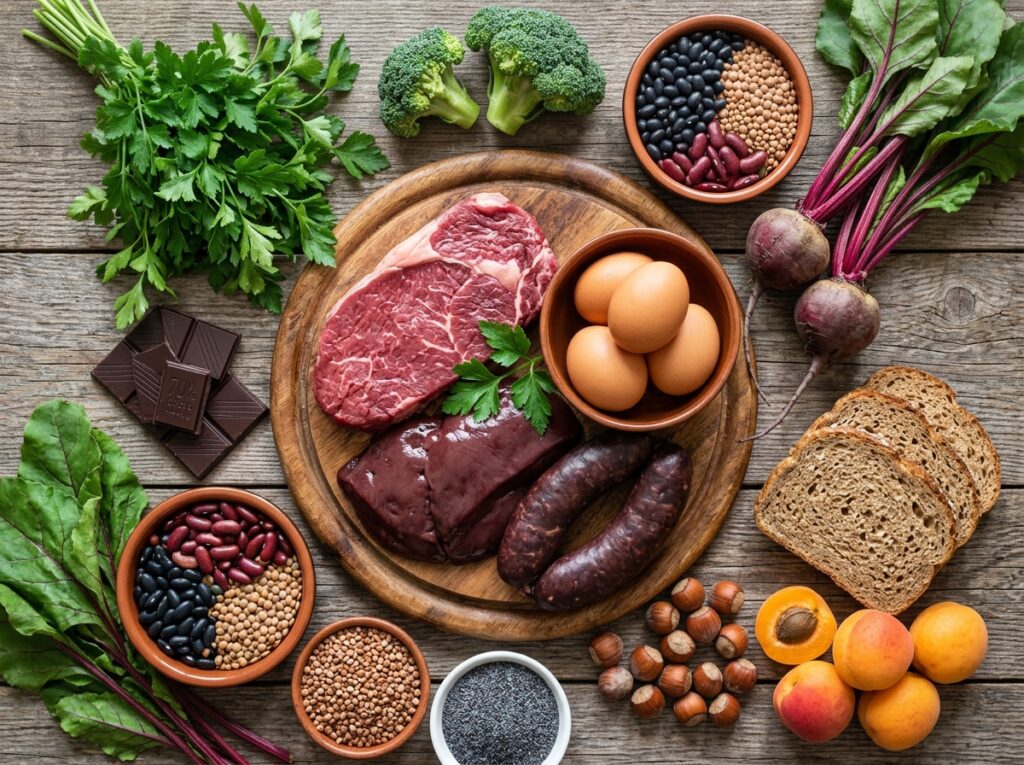
- Beef liver — the absolute champion of iron content. A 100g serving can provide up to 6mg of highly bioavailable iron. It’s also rich in vitamin B12 and folate, nutrients essential for red blood cell production.
- Lean red meat — cuts like sirloin and lean beef provide iron, zinc, and protein that support hemoglobin production.
- Tuna and sardines — fish are underrated sources of heme iron. Canned sardines, especially, are affordable and highly nutritious.
- Chicken — especially thighs and drumsticks, which contain more iron than breast meat.
- Oysters and shellfish — among seafood, they are some of the richest sources of iron and vitamin B12.
- Eggs — the yolk contains iron and vitamin D. Not extremely powerful alone, but helpful as part of a balanced diet.
Plant Sources of Non-Heme Iron
- Beans — a staple in many diets and one of the richest plant-based iron sources. The secret lies in the combination: beans with meat and vitamin C dramatically improve absorption.
- Lentils — even higher in iron concentration than beans and also rich in folate.
- Chickpeas — versatile and nutritious, great for people who don’t eat meat.
- Cooked spinach — here’s an important nuance. Raw spinach contains oxalates that hinder iron absorption. Cooking significantly reduces this effect.
- Collard greens — excellent source of non-heme iron and naturally rich in vitamin C, which boosts absorption.
- Beets — popular in anti-anemia diets. While modest in iron, they contain folate and nitrates that improve circulation and oxygen delivery.
- Tofu — one of the densest non-heme iron sources for vegetarians and vegans.
- Quinoa — a complete grain that contains iron and fewer absorption-blocking phytates than many other grains.
- Pumpkin seeds — 100g may provide up to 8mg of iron. Easy to add to salads, yogurt, and smoothies.
- Cashews — among nuts, one of the richest in iron.
- Prunes — provide iron, vitamin C, and sorbitol, which supports digestion and nutrient absorption.
- Molasses — one tablespoon contains around 3mg of iron. In moderation, it can be a strategic sweetener for people with anemia.
- Pure açaí — surprisingly rich in iron. The benefit comes from unsweetened pure pulp, not heavily processed versions loaded with syrup.
The Hidden Villain Nobody Suspects: Green Tea
Here’s the part that surprises most people: green tea, consumed by millions as a symbol of healthy living, contains tannins — compounds that bind to iron and block its absorption when consumed with meals.
The same is true for black tea, coffee, and even excessive cocoa. These foods are not inherently bad — timing is the issue. Drinking them during or immediately after an iron-rich meal can reduce iron absorption by up to 60%.
Other Foods That Interfere With Iron Absorption
- Milk and dairy products — calcium competes directly with iron for absorption.
- Wheat bran and ultra-processed foods rich in phytates — phytates reduce iron bioavailability.
- Raw spinach and raw Swiss chard — oxalates impair absorption; cooked versions are much better.
- Soft drinks — phosphates in cola beverages interfere with both iron and calcium absorption.
The Simplest and Most Powerful Trick: Vitamin C
If there is one nutritional “hack” for anemia, it’s this: consume vitamin C together with iron-rich foods, especially plant-based sources.
Vitamin C converts non-heme iron into a form more easily absorbed by the intestines, potentially increasing absorption up to threefold. In practice:
- Squeeze lemon juice over beans
- Eat an orange after lentils
- Add raw bell peppers to salads with greens
- Include acerola or citrus fruits with plant-based iron meals
This simple adjustment often makes a bigger difference than doubling the amount of iron on your plate.
Build a Smarter Plate
An effective anti-anemia meal includes:
✅ A source of heme iron (meat, chicken, or fish) or a generous source of non-heme iron (beans, lentils, tofu)
✅ A vitamin C-rich food (lemon, bell peppers, oranges, acerola)
✅ No coffee, tea, or milk during the same meal
✅ Cooked leafy greens as a side dish
Small changes in food combinations can have a major impact on blood test results — and many doctors simply don’t have time to explain this during appointments.
Conclusion
Fighting anemia through nutrition is possible — but it requires more than good intentions. It requires understanding which foods to choose, how to combine them, and especially what to avoid at the wrong time.
If you’ve been dealing with anemia and taking supplements without improvement, take a closer look at your diet. Sometimes the problem isn’t what’s missing from your plate — it’s what’s blocking the nutrients already there.
Talk to a nutritionist, adjust your food combinations, and give your body the right conditions to absorb what it needs. The difference will show up both in your blood work — and in the mirror.
Know someone who has struggled with anemia for years without results? Share this article — it might be the breakthrough they’ve been missing.