
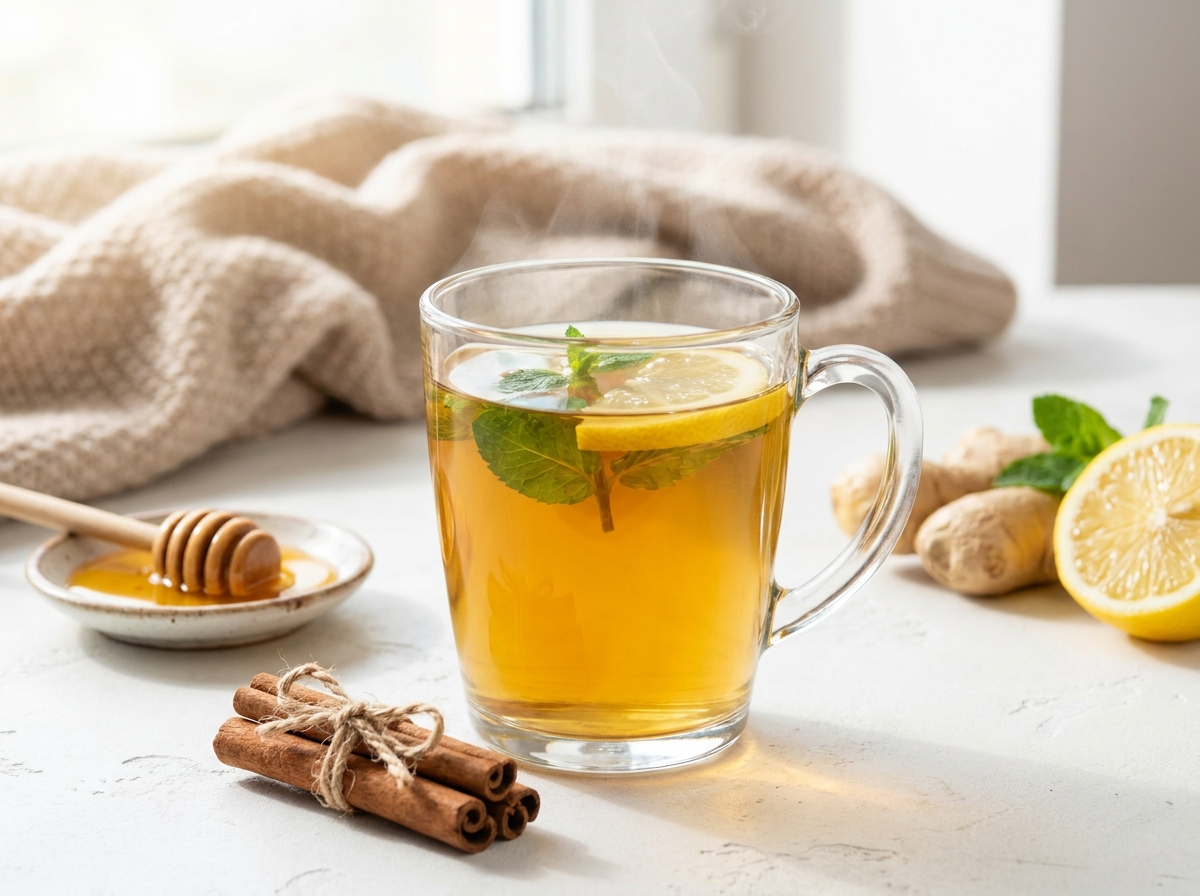
Have you ever spent an entire night coughing without being able to sleep? Or lost your voice for days because of a persistent cough that simply wouldn’t go away? If so, you’re not alone — and the solution might already be sitting in your kitchen cabinet.
In this article, you’ll discover the 13 best teas for coughs, with simple step-by-step preparation instructions. No complicated recipes, no hard-to-find ingredients.
Important: These teas relieve cough symptoms but do not replace medical advice. If your cough lasts more than 2 weeks, comes with high fever, or makes it hard to breathe, see a doctor.
Why Does Tea Work for Coughs?
Before jumping to the recipes, it helps to understand why tea works. Many medicinal plants contain compounds such as flavonoids, tannins, and essential oils that act directly on the throat’s mucous membrane — hydrating it, reducing inflammation, and loosening mucus. The warmth of the liquid alone helps dilate the airways and provides immediate relief.
The 13 Best Teas for Coughs
1. Ginger and Honey Tea
Ginger is one of the most studied natural anti-inflammatories in the world. Combined with honey — which has proven antibacterial properties — it forms the most powerful duo against irritating coughs.
How to prepare: Boil 2 cm of fresh grated ginger in 300 ml of water for 10 minutes. Strain, let it cool slightly, and add 1 tablespoon of honey.
2. Thyme Tea
Thyme contains thymol, a compound with bronchodilating and expectorant action. A study published in Arzneimittelforschung showed that thyme extracts are as effective as conventional cough syrups.
How to prepare: Pour hot water over 1 tablespoon of dried thyme. Cover and steep for 10 minutes. Strain and drink up to 3 times a day.
3. Licorice Root Tea
Licorice root has demulcent properties — meaning it coats and protects the throat’s mucous membrane. Excellent for persistent dry coughs.
How to prepare: Boil 1 teaspoon of dried licorice root in 250 ml of water for 10 minutes. Strain and drink up to 2 times a day. Avoid if you have high blood pressure.
4. Peppermint Tea
The menthol in peppermint creates an immediate sensation of freshness and airway relief. Great for dry and irritating coughs.
How to prepare: Pour boiling water over 5 fresh peppermint leaves. Cover for 5 minutes, strain, and drink. Do not boil the peppermint — it destroys the menthol.
5. Eucalyptus Tea
Used in steam inhalations and teas for centuries, eucalyptus acts as a natural decongestant. Ideal when your cough comes with a stuffy nose.
How to prepare: Add 4 eucalyptus leaves to 500 ml of boiling water. Cover and steep for 10 minutes. Strain and drink — you can also inhale the steam for extra relief.
6. Chamomile and Honey Tea
Chamomile is anti-inflammatory and calming — perfect to drink at night, as it relieves the cough while also helping you relax and sleep.
How to prepare: Pour hot water over 1 chamomile tea bag or 1 tablespoon of dried chamomile. Cover for 5 minutes, strain, and add honey to taste.
7. Fennel Seed Tea
Rich in anethole, fennel has expectorant and antispasmodic action — it helps control the spasms that trigger irritating coughs.
How to prepare: Boil 1 tablespoon of fennel seeds in 200 ml of water for 5 minutes. Strain and drink warm.
8. Green Tea with Lemon
Green tea is rich in antioxidant catechins with anti-inflammatory action. Lemon is a source of vitamin C and boosts immunity.
How to prepare: Brew green tea with water at 80°C (not boiling, to avoid bitterness). Add a few drops of fresh lemon juice. Sweeten with honey if preferred.
9. Garlic Tea
It may sound unusual, but garlic contains allicin, one of the most potent natural antimicrobial compounds known. Works very well for coughs with an infectious origin.
How to prepare: Crush 2 garlic cloves and boil in 300 ml of water for 10 minutes. Strain well, add honey and a pinch of cinnamon to soften the flavor.
10. Apple, Cinnamon, and Clove Tea
Beyond being delicious, this tea warms you from the inside, stimulates circulation, and has mild anti-inflammatory action — great for children older than 2 years.
How to prepare: Boil half a chopped apple with 1 cinnamon stick and 2 cloves in 300 ml of water for 10 minutes. Strain and serve warm with honey.
11. Propolis, Honey, and Lemon Tea
Propolis is produced by bees and has antibacterial, antiviral, and healing properties. A powerful combination for coughs of infectious origin.
How to prepare: Brew a base tea of your choice (chamomile or fennel work well). Add 10 drops of propolis extract, the juice of half a lemon, and 1 tablespoon of honey.
12. Elderberry Tea
Elderberry is packed with antioxidants and has been studied for its ability to reduce the duration of colds and flu. Ideal when the cough comes with general malaise.
How to prepare: Boil 1 tablespoon of dried elderberries in 300 ml of water for 15 minutes. Strain carefully and add honey and a squeeze of lemon.
13. Ginger, Turmeric, and Black Pepper Tea
The most powerful triple combination on this list. Turmeric contains curcumin with intense anti-inflammatory action, and black pepper increases its absorption by up to 2,000%, according to research from Maastricht University.
How to prepare: Boil 1 cm of fresh ginger + ½ teaspoon of turmeric powder + 1 pinch of black pepper in 300 ml of water for 10 minutes. Strain, add honey, and drink warm.
Which Tea Should You Choose?
| Type of Cough | Best Option |
|---|---|
| Dry and irritating cough | Licorice root, Chamomile, Peppermint |
| Cough with mucus | Thyme, Fennel, Eucalyptus |
| Cough with stuffy nose | Eucalyptus, Ginger |
| Nighttime cough | Chamomile with honey |
| Cough from infection | Garlic, Propolis, Turmeric |
Final Thoughts
Nature offers incredible resources to relieve coughs — and the best part is that most of these ingredients are affordable and easy to find. Choose the tea that best matches your type of cough, prepare it with care, and drink it warm 2 to 3 times a day.
Remember: tea is an ally, not a substitute for medical care. If your cough persists for more than 10 days or comes with fever, see a healthcare professional.
Did you find this helpful? Save it for when you need it and share it with someone who can’t stop coughing right now!
Article based on scientific evidence and World Health Organization (WHO) guidelines for the use of medicinal plants.