
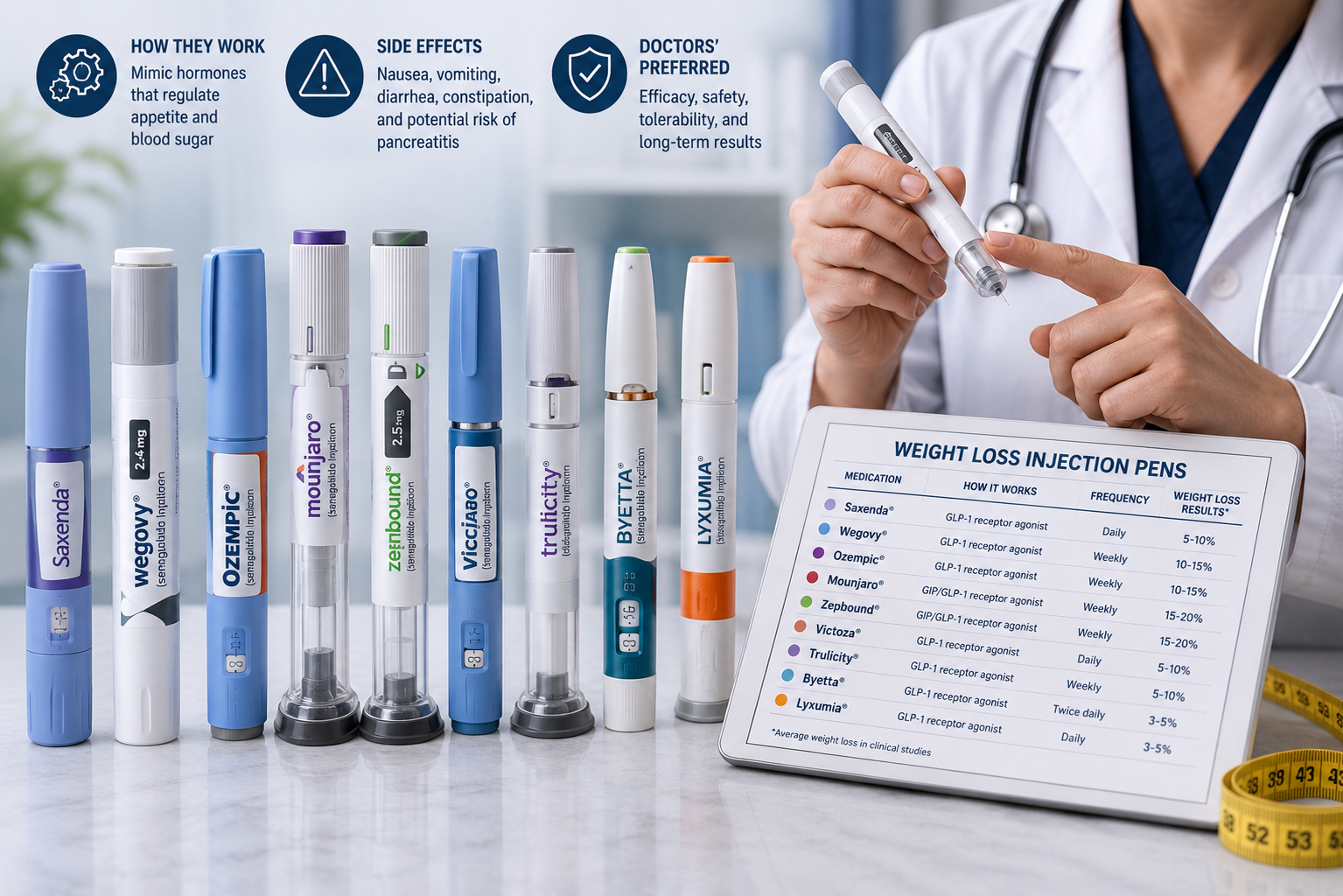
Ozempic did not invent injectable weight loss medicine. It made it famous.
GLP-1 receptor agonists — the drug class to which Ozempic belongs — have been prescribed for type 2 diabetes since 2005. Liraglutide was approved specifically for weight loss in 2014. The clinical infrastructure for injectable obesity medicine existed for years before semaglutide became a household name. What changed was the magnitude of results, the cultural moment, and a supply chain that could not keep up with demand.
For patients and physicians navigating this landscape in 2024 and beyond, the relevant question is no longer “should I consider a weight loss injection?” It is: “which one, and why?”
How These Medications Work
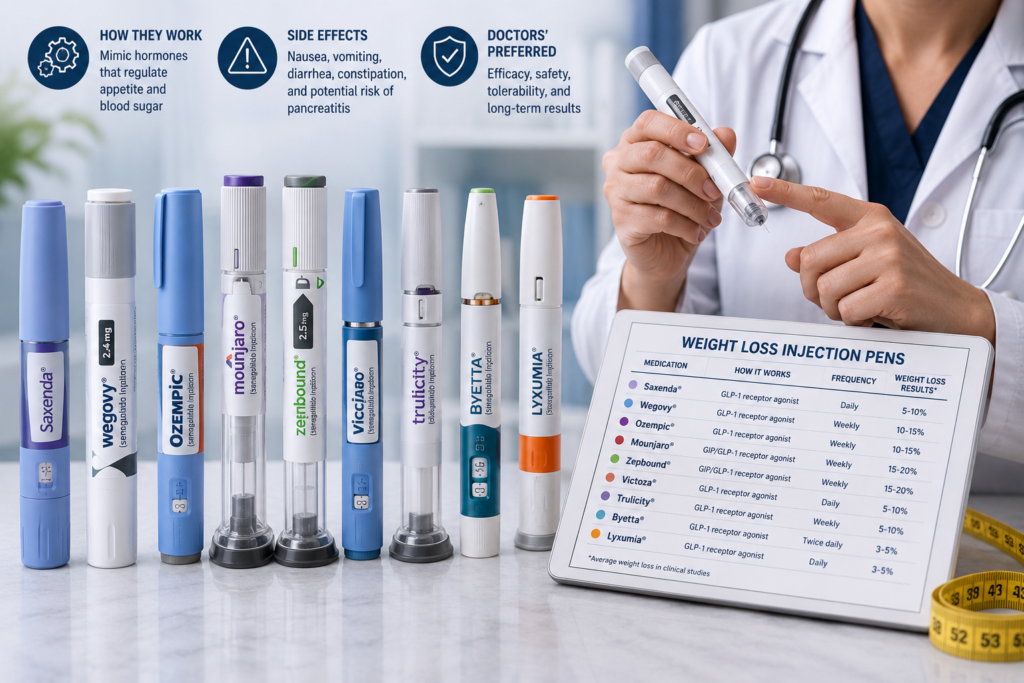
Most injectable weight loss medications work by mimicking hormones the gut and pancreas release after eating. GLP-1 (glucagon-like peptide-1) is the primary target: it slows gastric emptying, reduces appetite by acting on the hypothalamus, improves insulin sensitivity, and reduces the brain’s reward response to food. Newer medications add GIP (glucose-dependent insulinotropic polypeptide) and glucagon receptor agonism to the mix, producing additive effects on weight reduction.
The result is not simply “feeling less hungry.” It is a fundamental recalibration of the hormonal environment that governs hunger, satiety, and energy storage — effects that persist for as long as the medication is taken.
The 9 Injections Compared
| Medication | Brand | Class | Frequency | Avg. Weight Loss | FDA Weight Approval |
|---|---|---|---|---|---|
| Semaglutide 2.4mg | Wegovy | GLP-1 | Weekly | ~15% | Yes (2021) |
| Tirzepatide 15mg | Zepbound | GLP-1 + GIP | Weekly | ~20–22% | Yes (2023) |
| Liraglutide 3mg | Saxenda | GLP-1 | Daily | ~5–8% | Yes (2014) |
| Semaglutide 2mg | Ozempic | GLP-1 | Weekly | ~10–12% | T2D only |
| Tirzepatide 15mg | Mounjaro | GLP-1 + GIP | Weekly | ~15–20% | T2D only |
| Dulaglutide | Trulicity | GLP-1 | Weekly | ~3–5% | T2D only |
| Exenatide ER | Bydureon BCise | GLP-1 | Weekly | ~3–4% | T2D only |
| Pramlintide | Symlin | Amylin analog | With meals | ~3–4% | T1D/T2D only |
| Retatrutide | (pipeline) | GLP-1 + GIP + glucagon | Weekly | ~24% (Phase 2) | Not yet approved |
The Top Options in Detail
1. Semaglutide 2.4mg — Wegovy
Wegovy is the version of semaglutide approved specifically for chronic weight management in adults with obesity (BMI ≥30) or overweight (BMI ≥27) with at least one weight-related condition. The STEP clinical trial program found an average weight reduction of approximately 15% over 68 weeks — roughly 15 kilograms in a person starting at 100kg.
Beyond weight loss, the SELECT cardiovascular outcomes trial found that Wegovy reduced the risk of major cardiovascular events (heart attack, stroke, cardiovascular death) by 20% in adults with overweight or obesity and established cardiovascular disease — the first weight loss medication to demonstrate this level of cardiovascular benefit. This finding significantly expanded its clinical indication.
Best for: Adults with obesity or overweight with cardiovascular risk, prediabetes, hypertension, or sleep apnea who want the strongest clinically proven option with cardiovascular outcome data.
2. Tirzepatide 15mg — Zepbound
Tirzepatide is the most effective weight loss medication currently approved by the FDA. By targeting both GLP-1 and GIP receptors simultaneously, it produces greater appetite suppression and metabolic improvement than GLP-1 agonism alone. The SURMOUNT-1 trial found an average weight reduction of 20.9% over 72 weeks at the 15mg dose — approximately 21 kilograms in a 100kg person.
In a head-to-head trial published in JAMA Internal Medicine, tirzepatide produced significantly greater weight loss than semaglutide across all dose comparisons. Zepbound was approved by the FDA for obesity treatment in November 2023.
Best for: Patients who have not achieved adequate results with GLP-1 monotherapy, those with type 2 diabetes seeking maximum glycemic and weight benefit, or patients for whom the highest efficacy is the clinical priority.
3. Liraglutide 3mg — Saxenda
Saxenda was the first GLP-1 receptor agonist approved specifically for weight management and remains a widely prescribed option. It requires daily injection rather than weekly, which affects adherence for some patients but allows for more flexible dose adjustments. Average weight loss in the SCALE trial was 5 to 8% — meaningfully lower than semaglutide or tirzepatide, but clinically significant for the right patient profile.
Best for: Patients who prefer daily dosing for tighter control, those with previous intolerance to weekly GLP-1 formulations, adolescents (Saxenda is approved for weight management in patients 12 and older), or patients for whom cost is a primary consideration as older generics may become available sooner.
4 and 5. Ozempic and Mounjaro — The T2D Prescriptions Used Off-Label
Ozempic (semaglutide 2mg) and Mounjaro (tirzepatide, all doses) carry FDA approval for type 2 diabetes management — not obesity. In practice, they are prescribed off-label for weight loss in patients without diabetes at high rates, often because insurance coverage for T2D indications is more accessible than for weight-loss-specific brands. Clinically, the medications are identical to their weight-loss-approved counterparts. The distinction is regulatory and commercial, not pharmacological.
6. Dulaglutide — Trulicity
Dulaglutide is a weekly GLP-1 agonist with more modest weight loss results (3 to 5%) and a strong cardiovascular outcomes trial (REWIND) showing significant reduction in major cardiovascular events in T2D patients. It is rarely the first choice for weight loss but may be appropriate for patients who primarily need glycemic control with a secondary weight benefit.
7. Exenatide Extended-Release — Bydureon BCise
One of the original GLP-1 agonists, exenatide in its extended-release form delivers consistent plasma levels via weekly injection in an autoinjector device. Weight loss outcomes (3 to 4%) are the most modest among the weekly GLP-1 options, and it has largely been displaced by newer agents in clinical practice. It retains a role in cost-sensitive settings and in patients who tolerated earlier formulations before newer options became available.
8. Pramlintide — Symlin
Pramlintide works through a different mechanism entirely. It is a synthetic analog of amylin — a hormone co-secreted with insulin by pancreatic beta cells that slows gastric emptying, suppresses glucagon, and reduces appetite. It is injected with each meal (two to three times daily) and produces modest weight loss of 3 to 4%. It is approved for type 1 and type 2 diabetes and occasionally used in combination with GLP-1 agonists for additive effect in patients who cannot achieve adequate results with a single agent.
9. Retatrutide — The Next Generation
Retatrutide is a triple agonist targeting GLP-1, GIP, and glucagon receptors simultaneously. Phase 2 trial results published in The New England Journal of Medicine showed an average weight reduction of 24.2% over 48 weeks — the highest ever recorded for a pharmaceutical weight loss agent at the time of publication. Phase 3 trials are ongoing. It is not yet FDA approved but is expected to represent the next major entry in injectable obesity medicine within the next one to two years.
How Doctors Choose Between Them
The decision is not simply about which medication produces the most weight loss. Physicians weigh several factors:
- Diabetes status: Patients with T2D often benefit most from tirzepatide, which produces superior glycemic control alongside weight reduction
- Cardiovascular history: Wegovy’s SELECT trial data makes it the preferred option for patients with established cardiovascular disease
- Insurance coverage: Access and out-of-pocket cost remain significant determinants of which medication a patient actually receives
- Tolerability history: Nausea, vomiting, and gastroparesis-like symptoms affect a subset of patients on GLP-1 agonists; switching formulations or classes sometimes resolves these issues
- Injection frequency preference: Daily vs. weekly dosing affects adherence meaningfully in some patients
All of these medications require lifestyle modification — diet and exercise — to achieve and maintain results. None produces permanent weight loss independently of sustained use; weight regain after discontinuation is documented across all agents.
This article is for informational purposes only and does not replace professional medical advice. Injectable weight loss medications carry real risks including gastrointestinal side effects, pancreatitis risk, and contraindications for patients with personal or family history of medullary thyroid carcinoma or multiple endocrine neoplasia. These medications require a prescription and ongoing medical supervision. Consult an endocrinologist, bariatric physician, or general practitioner to determine whether any of these medications are appropriate for your individual health profile.