
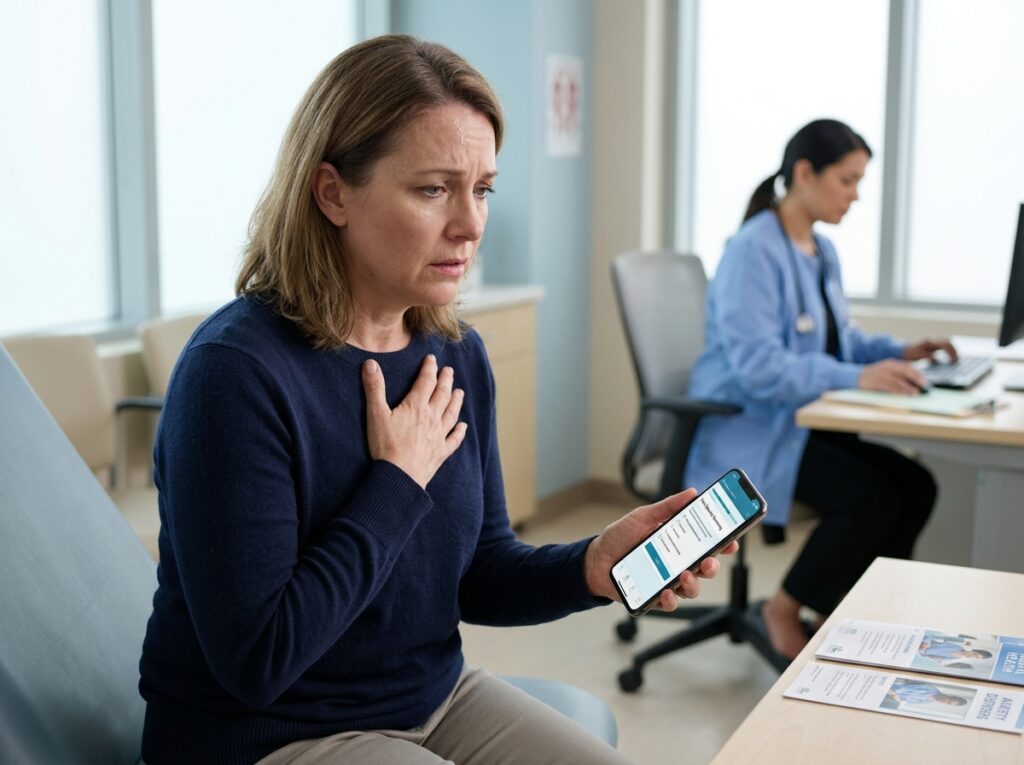
It begins without warning. The heart starts racing. The chest tightens. Breathing becomes labored. A wave of overwhelming terror rises — the absolute conviction that something catastrophic is happening, that this might be a heart attack, that death or complete loss of control is seconds away. And then, after 10 to 20 minutes, it passes. Completely. Leaving behind only exhaustion, confusion, and a dread of when it will happen again.
For millions of people, this experience — a panic attack — occurs repeatedly, unexpectedly, and without a clear trigger. When it begins reorganizing daily life around the fear of the next episode, it has crossed from isolated panic attack into panic disorder.
The two are related but clinically distinct. And the distinction matters — because panic disorder has effective treatments, most people who seek care improve significantly, and years of unnecessary suffering are the cost of not knowing the condition has a name.
What Panic Disorder Is — and How It Differs From a Panic Attack
A panic attack is a discrete episode of intense fear that peaks within minutes and includes a combination of physical and psychological symptoms. Panic attacks are not inherently a disorder — they can occur in anyone under extreme stress, as a side effect of certain substances, or as a feature of other anxiety disorders.
Panic disorder is diagnosed when recurrent, unexpected panic attacks are followed by at least one month of persistent concern about additional attacks, worry about their consequences (heart disease, “going crazy,” losing control), or significant behavioral changes to avoid triggering another episode. The between-attack anxiety is what defines the disorder — not the attacks themselves.
According to the DSM-5, the diagnostic manual used by psychiatrists worldwide, panic disorder affects approximately 2 to 3% of adults in any given year and up to 5% over a lifetime. Women are diagnosed at roughly twice the rate of men. Average age of onset is the mid-twenties, but panic disorder occurs across the entire lifespan.
The 13 Official Panic Attack Symptoms
The DSM-5 defines panic attacks by the following 13 symptoms. A panic attack requires the abrupt onset of intense fear or discomfort that peaks within minutes and includes at least 4 of the following:
Physical symptoms:
- Palpitations, pounding heart, or accelerated heart rate — the most common symptom, and the one most frequently mistaken for a cardiac event
- Sweating — often sudden and drenching, disproportionate to physical exertion
- Trembling or shaking — visible or internal, in the hands, legs, or throughout the body
- Shortness of breath or smothering sensation — the feeling of being unable to get enough air despite normal breathing
- Feelings of choking — tightness in the throat, often with no physical obstruction
- Chest pain or discomfort — typically sharp, pressing, or burning; drives a large proportion of panic-related emergency department visits
- Nausea or abdominal distress — cramping, churning, or the urge to vomit
- Dizziness, unsteadiness, lightheadedness, or faintness — ranging from mild instability to the sense of imminent collapse
- Chills or hot flushes — often alternating, sometimes accompanied by flushing or pallor
- Paresthesias — tingling or numbness, typically in the hands, feet, or face; caused by hyperventilation-induced changes in blood CO₂ levels
Psychological symptoms:
11. Derealization or depersonalization — derealization is the sense that the external world is unreal, dreamlike, or distant; depersonalization is the feeling of being detached from one’s own body or thoughts. Both are profoundly disorienting and frequently misinterpreted as signs of psychosis — they are not.
12. Fear of losing control or “going crazy” — a terror that the episode will result in permanent mental breakdown or uncontrollable behavior
13. Fear of dying — the conviction, at peak intensity, that death is imminent — from heart attack, stroke, or unknown cause
The Symptom Most People Miss: What Happens Between Attacks
The attacks are frightening. The between-attack period is what creates the disorder.
Anticipatory anxiety — the persistent, background dread of the next attack — is the defining feature of panic disorder and the mechanism through which the condition expands. After several unexpected attacks, the brain begins scanning for signs of danger continuously. Normal physiological events — a slightly elevated heart rate after climbing stairs, a moment of breathlessness, a skipped heartbeat — become triggers for alarm. The brain interprets these normal sensations as the beginning of another attack, which causes anxiety, which increases heart rate, which confirms the alarm, which escalates into a full attack.
This interoceptive hypersensitivity (heightened awareness of and reactivity to internal body sensations) is the core driver of panic disorder’s self-perpetuating cycle — and the primary target of cognitive behavioral therapy for the condition.
Agoraphobia — avoidance of situations where escape would be difficult during an attack, or where help would be unavailable — develops in approximately a third of people with panic disorder over time. It begins reasonably: avoiding the location where the first attack occurred. It expands: avoiding public transport, crowds, shops, unfamiliar environments, driving. In severe cases, it results in the person becoming largely housebound — not because they fear the outside, but because they fear an attack in a place they cannot immediately escape.
Clinical Self-Assessment
The following questions are based on the Panic Disorder Severity Scale (PDSS), a validated clinical tool used by psychiatrists to assess panic disorder severity. This is not a diagnostic test — it is a structured self-reflection tool to help you recognize whether your experiences match the clinical pattern.
Rate each question from 0 (not at all) to 4 (extremely/constantly):
1. How often have you had panic attacks in the past week, including limited-symptom attacks?
(0 = none; 4 = more than once daily)
2. How distressing were your panic attacks when they occurred?
(0 = not distressing; 4 = extremely distressing)
3. How much anxiety have you felt about when your next panic attack will occur?
(0 = none; 4 = constant and severely distressing)
4. Have you avoided or felt afraid of situations because they might trigger a panic attack?
(0 = no avoidance; 4 = extensive avoidance of many situations)
5. Have you avoided physical sensations — like exercise, caffeine, or heat — because they resemble how you feel during a panic attack?
(0 = no avoidance; 4 = avoidance of most physical sensations)
6. Has panic disorder affected your ability to work, study, or manage daily responsibilities?
(0 = no impairment; 4 = severe impairment)
7. Has panic disorder affected your relationships or social activities?
(0 = no impact; 4 = severe impact)
Interpreting your score:
- 0–7: Minimal — symptoms are mild and may not represent panic disorder
- 8–15: Mild panic disorder — symptoms are present and worth discussing with a physician or therapist
- 16–22: Moderate panic disorder — professional evaluation and treatment is recommended
- 23–28: Severe panic disorder — prompt professional support is strongly indicated
What Causes Panic Disorder
Panic disorder arises from an interaction of biological vulnerability and environmental triggers:
Biological factors: A hyperreactive amygdala — the brain region responsible for fear responses — is consistently found in neuroimaging studies of people with panic disorder. There is a significant genetic component: having a first-degree relative with panic disorder approximately doubles lifetime risk.
Psychological factors: A tendency toward anxiety sensitivity — the belief that anxiety symptoms themselves are dangerous — is the single strongest psychological predictor of panic disorder development.
Triggering events: Major stressors (bereavement, relationship breakdown, job loss), significant life transitions, and physical health scares frequently precede the onset of panic disorder. However, many people develop it without an identifiable trigger.
Treatment — What Works
Panic disorder responds well to treatment. The two most evidence-based approaches, used separately or in combination:
Cognitive behavioral therapy (CBT): The most effective non-pharmacological treatment. Specifically, interoceptive exposure therapy — deliberately inducing mild versions of the physical sensations associated with panic (rapid breathing, spinning, exercise) in a controlled setting — systematically reduces the brain’s alarm response to these sensations. Studies consistently show 70 to 90% significant improvement rates with structured CBT.
Medication: SSRIs (particularly sertraline, paroxetine, and escitalopram) and SNRIs are first-line pharmacological treatments. Benzodiazepines produce immediate relief but are not recommended for long-term management due to dependence risk and evidence that they interfere with the extinction learning that drives CBT’s effectiveness.
Controlled breathing: Panic attacks frequently involve hyperventilation, which drops blood CO₂ levels and directly produces many physical symptoms (tingling, dizziness, chest tightness). Diaphragmatic breathing at approximately 6 breaths per minute normalizes CO₂ and interrupts this physiological component.
This article is for informational purposes only and does not replace professional mental health evaluation or treatment. The self-assessment above is not a diagnostic tool. If you recognize the pattern described here in your own experience, consult a psychiatrist, psychologist, or qualified mental health professional. Panic disorder is highly treatable, and most people who seek appropriate care achieve significant improvement.