
If you have ever had a canker sore, you know the particular misery of it. A small wound, insignificant in size, disproportionate in pain. Talking hurts. Eating hurts. Your tongue finds it constantly, as if checking whether it has gotten any less terrible, and it has not.
What makes canker sores especially frustrating is that they seem to arrive randomly — no warning, no obvious cause, no reliable way to prevent them. Most people accept them as an unfortunate feature of their biology and wait for them to pass.
What the research suggests, however, is that for a significant proportion of recurrent sufferers, the trigger is not random at all. It is consistent, repeated, and sitting in the kitchen.
Every Canker Sore You’ve Had May Have Had the Same Trigger — Here’s How to Find Out in 3 Days
If you have ever had a canker sore, you know the particular misery of it. A small wound, insignificant in size, disproportionate in pain. Talking hurts. Eating hurts. Your tongue finds it constantly, as if checking whether it has gotten any less terrible, and it has not.
What makes canker sores especially frustrating is that they seem to arrive randomly — no warning, no obvious cause, no reliable way to prevent them. Most people accept them as an unfortunate feature of their biology and wait for them to pass.
What the research suggests, however, is that for a significant proportion of recurrent sufferers, the trigger is not random at all. It is consistent, repeated, and sitting in the kitchen.
What Canker Sores Actually Are
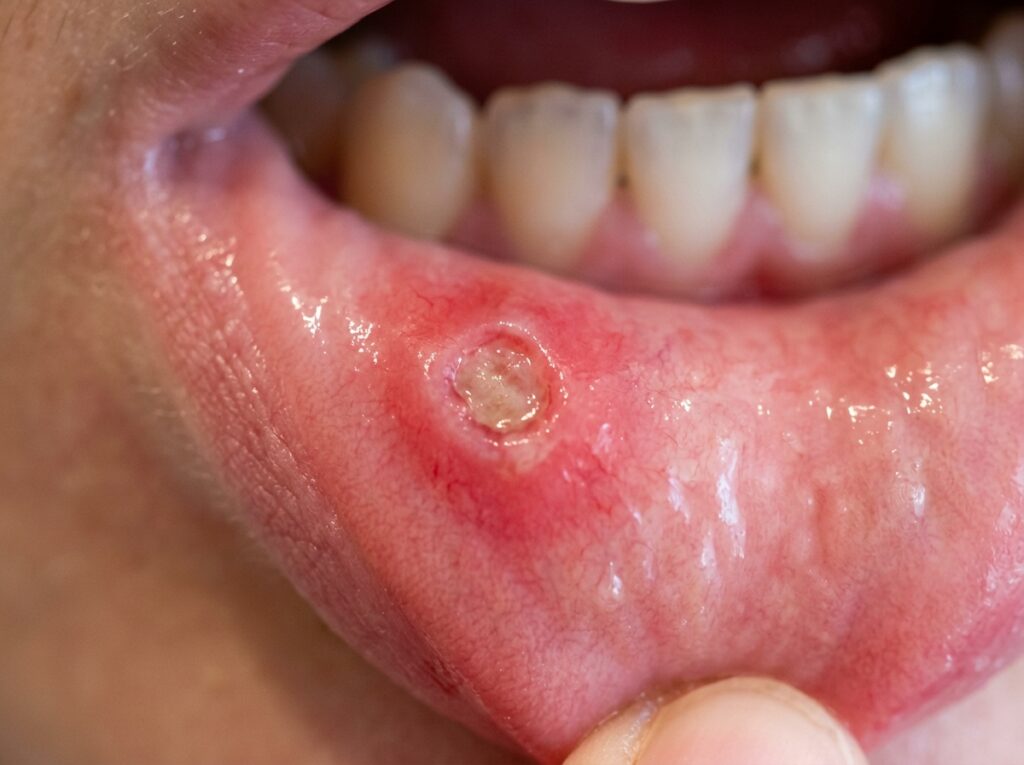
Canker sores — medically called aphthous ulcers — are shallow lesions that form on the soft tissues inside the mouth: the inner cheeks, inner lips, tongue, soft palate, and the base of the gums. Unlike cold sores, they are not caused by a virus and are not contagious.
Their exact cause is not fully understood, but research consistently identifies them as an immune-mediated inflammatory response — the immune system overreacts to a local trigger in the oral mucosa, producing the characteristic ulcer. What determines that trigger varies between individuals, but dietary factors are among the most consistently implicated across clinical literature.
Three to five days is the typical onset-to-appearance window between exposure to a trigger and visible ulcer formation — which is precisely why the connection is so difficult to make without deliberate investigation.
The “Healthy” Food Most Likely Behind Your Canker Sores
Acidic Fruits — The Most Common Dietary Trigger
The foods most consistently linked to canker sore outbreaks in clinical surveys and dietary studies are not processed, artificial, or obviously problematic. They are among the most nutritionally celebrated foods in modern diets.
Citrus fruits — oranges, grapefruits, lemons, limes — top the list. Their high citric acid content both directly irritates oral mucosa and creates the pH environment most associated with ulcer formation in susceptible individuals. A study published in the Journal of Oral Pathology and Medicine found that citrus consumption was the most frequently self-reported dietary trigger among recurrent aphthous ulcer patients.
Tomatoes — raw tomatoes, tomato sauce, tomato juice, ketchup — are the second most commonly reported trigger. Tomatoes contain both citric and malic acid, along with compounds that can provoke immune reactions in sensitive individuals. Many people who eat tomatoes daily have never connected their regular canker sore outbreaks to a food they consider entirely healthy.
Pineapple — contains bromelain, an enzyme that breaks down mucosal tissue, and high citric acid levels. Even small amounts can initiate the inflammatory cascade that produces ulcers in susceptible individuals within days.
Strawberries, kiwi, and figs — less commonly reported but sufficiently documented in dietary trigger studies to warrant inclusion in an elimination protocol.
SLS in Toothpaste — The Daily Trigger Nobody Suspects
Sodium lauryl sulfate (SLS) is a foaming agent present in the majority of commercial toothpastes. It is not a food, but it contacts the oral mucosa twice daily, every day, making it one of the most consistent chemical exposures the mouth receives.
Multiple clinical trials have found that switching from SLS-containing toothpaste to SLS-free formulations significantly reduced canker sore frequency in recurrent sufferers — one Norwegian study reported a 64% reduction in ulcer episodes.
If you experience frequent canker sores and have never changed your toothpaste, this is the single most accessible intervention available. SLS-free toothpastes are widely available and cost no more than standard formulations.
High-Arginine Foods — The Amino Acid Connection
L-arginine is an amino acid found in high concentrations in several foods considered nutritional staples: walnuts, almonds, peanuts, chocolate, seeds, and whole grains. Its relevance to canker sores lies in its relationship with L-lysine — a competing amino acid that suppresses the inflammatory activity associated with aphthous ulcers.
When dietary arginine significantly exceeds lysine intake, the balance shifts toward increased oral mucosal vulnerability. This is the same arginine-lysine mechanism involved in herpes simplex outbreaks — canker sores are not caused by herpes, but they share this susceptibility to amino acid imbalance.
For people who eat nuts, seeds, or chocolate daily and experience regular canker sores, the amino acid ratio in their diet is worth examining. Increasing lysine-rich foods — fish, chicken, eggs, legumes, dairy — while temporarily reducing high-arginine foods is a practical dietary intervention with documented clinical support.
Gluten — The Less Common But Real Connection
A subset of canker sore sufferers has an underlying sensitivity to gluten — the protein in wheat, barley, and rye — that manifests in the oral mucosa rather than the gastrointestinal tract. Recurrent aphthous ulcers are a recognized extraintestinal manifestation of both celiac disease and non-celiac gluten sensitivity.
Studies estimate that between 3 and 5% of recurrent canker sore patients have undiagnosed celiac disease. For this group, no dietary manipulation other than gluten elimination will break the pattern. If you have tried eliminating other triggers without success and also experience digestive irregularities, fatigue, or skin symptoms, celiac testing is worth discussing with your doctor.
How to Find Your Trigger in 3 Days
The most practical approach to identifying a personal dietary trigger is a structured short-term elimination.
Days 1 to 3: Remove the most likely suspects simultaneously
Eliminate all of the following for 72 hours:
- All citrus fruits and juices
- Tomatoes and tomato-based products
- Pineapple, strawberries, and kiwi
- Walnuts, almonds, peanuts, and chocolate
- Switch to an SLS-free toothpaste starting immediately
During this window, eat from the following low-trigger foods: rice, cooked vegetables (non-acidic), chicken, fish, eggs, dairy, bananas, and cooked legumes.
Day 4 onward: Reintroduce one food at a time, every two days
Reintroduce each eliminated food individually with a two-day gap between additions. Canker sores triggered by a specific food typically appear within 3 to 5 days of reintroduction. When an outbreak follows a specific reintroduction, you have your answer.
This protocol identifies the trigger for the majority of dietary-driven recurrent sufferers within two weeks.
Foods That Help Heal Existing Canker Sores
While identifying and removing triggers prevents future ulcers, certain foods and compounds support faster healing of existing ones:
Honey — applied directly to the ulcer, medical-grade honey reduces pain, decreases ulcer size, and shortens healing time. A randomized controlled trial found it significantly outperformed the standard topical corticosteroid for aphthous ulcer healing time.
Yogurt with live cultures — probiotic-rich foods support the oral microbiome and reduce the inflammatory environment that sustains ulcers. Daily yogurt consumption is associated with reduced canker sore frequency in observational studies.
Lysine-rich foods — fish, eggs, and legumes during an active outbreak support the amino acid balance that suppresses mucosal inflammation.
Cold foods — cold water, chilled yogurt, and ice chips provide temporary pain relief and reduce local inflammation without any therapeutic downside.
When Canker Sores Signal Something More
Most canker sores are dietary or stress-related and resolve within 7 to 14 days. See a doctor or dentist if:
- Sores are unusually large (over 1cm), unusually numerous, or heal in longer than 3 weeks
- Fever accompanies the outbreak
- Sores recur so frequently that healing of one overlaps with formation of the next
- You have other symptoms including digestive problems, joint pain, or skin lesions
These patterns may indicate an underlying condition — celiac disease, Behçet’s disease, inflammatory bowel disease, or immune deficiency — that requires medical evaluation beyond dietary modification.
The Bottom Line
Canker sores feel random. For most recurrent sufferers, they are not. There is a trigger — consistent, repeated, and almost always dietary — that initiates the same inflammatory response each time.
Three days of disciplined elimination, followed by systematic reintroduction, is enough to identify it for most people. The sore you have now will heal on its own. The next one may not need to happen at all.
This article is for informational purposes only and does not replace professional medical or dental advice. If you experience frequent, severe, or unusually large oral ulcers, consult a qualified healthcare professional.