

Chamomile is comfortable. It is familiar. It smells like the end of the day and tastes like something a grandmother would hand you with a warm expression and no further explanation needed. Millions of people drink it every night as part of a winding-down ritual that feels, if nothing else, like the right thing to do before bed.
The science behind chamomile and sleep is real but modest. Its active compound, apigenin, binds to GABA receptors in the brain and produces mild sedation. Studies show it can reduce the time it takes to fall asleep and improve subjective sleep quality in some populations — particularly postpartum women and elderly adults.
But modest is the operative word. For people with genuine sleep difficulty — lying awake with a racing mind, waking repeatedly through the night, or rising exhausted after eight hours — chamomile rarely moves the needle enough to matter. There is a tea that does. Most people have never heard of it. The research behind it has been building for decades. And the mechanism by which it works is meaningfully different from anything chamomile offers.
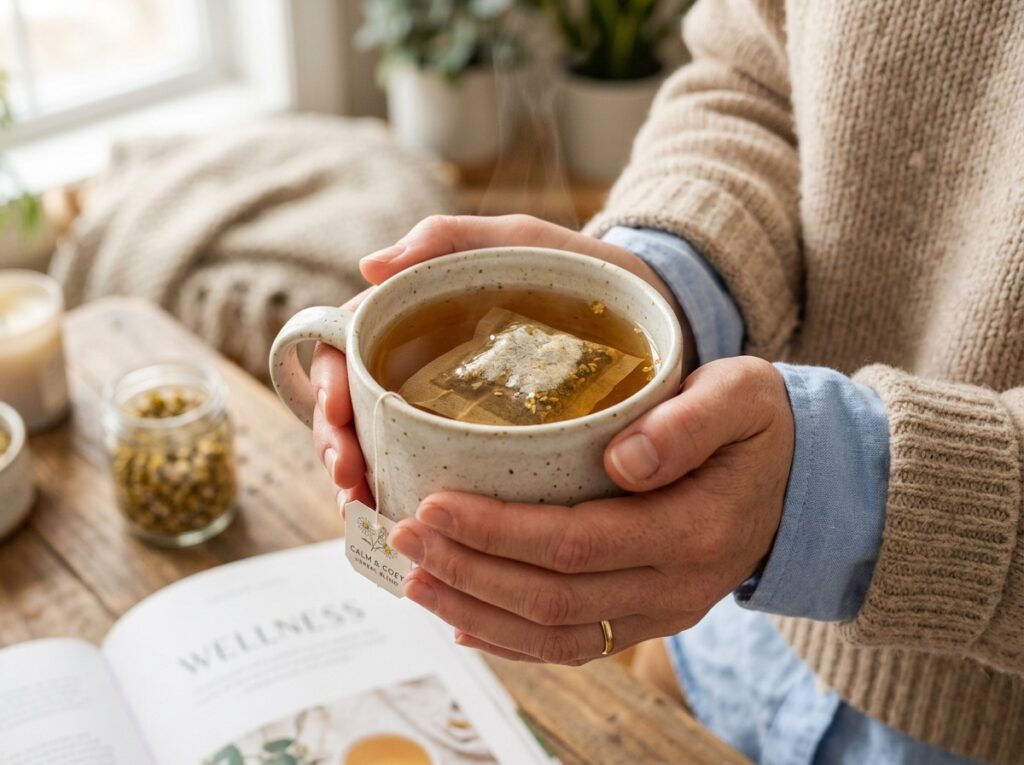
Everyone Drinks Chamomile for Sleep — But Sleep Scientists Drink Something Else Entirely
Chamomile is comfortable. It is familiar. It smells like the end of the day and tastes like something a grandmother would hand you with a warm expression and no further explanation needed. Millions of people drink it every night as part of a winding-down ritual that feels, if nothing else, like the right thing to do before bed.
The science behind chamomile and sleep is real but modest. Its active compound, apigenin, binds to GABA receptors in the brain and produces mild sedation. Studies show it can reduce the time it takes to fall asleep and improve subjective sleep quality in some populations — particularly postpartum women and elderly adults.
But modest is the operative word. For people with genuine sleep difficulty — lying awake with a racing mind, waking repeatedly through the night, or rising exhausted after eight hours — chamomile rarely moves the needle enough to matter.
There is a tea that does. Most people have never heard of it. The research behind it has been building for decades. And the mechanism by which it works is meaningfully different from anything chamomile offers.
The Tea: Passionflower
Passiflora incarnata — passionflower — is a climbing vine native to the southeastern United States and Central America. Its flowers are extraordinary: intricate, alien-looking, vibrantly purple and white. Indigenous communities across North America used it for centuries as a sedative and anxiolytic. European settlers learned its use, brought it back across the Atlantic, and by the 19th century it was listed in the United States National Formulary as an official sedative treatment.
Then pharmaceuticals arrived, and passionflower quietly retreated to the margins of herbal medicine — where it remained while the research quietly accumulated.
That research now makes a compelling case.
What the Science Actually Shows
A randomized, double-blind, placebo-controlled trial published in Phytotherapy Research — the gold standard study design — gave participants either passionflower tea or a placebo tea for seven nights. Sleep diary scores showed significantly improved sleep quality in the passionflower group. Crucially, the improvement was not just in falling asleep — it was in total sleep time, sleep efficiency, and waking after sleep onset, the measures most relevant to people who fall asleep but don’t stay asleep.
A separate study compared passionflower extract to low-dose oxazepam — a benzodiazepine prescribed for anxiety and insomnia — and found comparable effectiveness for anxiety reduction, with the passionflower group reporting fewer impairments in job performance. Same therapeutic benefit, without the dependency risk or morning sedation of a prescription drug.
Animal studies have clarified the mechanism. Passionflower contains chrysin and other flavonoids that bind to GABA-A receptors in the brain — the same receptor system targeted by benzodiazepines and sleep medications — but with a gentler, non-addictive binding profile. It also contains maltol, which enhances the effect of GABA itself, deepening the brain’s inhibitory signaling without suppressing it to the degree that pharmaceutical drugs do.
The result is a shift toward slower brainwave activity — less mental chatter, less physiological arousal, more of the conditions the brain needs to transition into genuine sleep.
Why Passionflower Works Where Chamomile Falls Short
The distinction comes down to mechanism and magnitude.
Chamomile’s apigenin binds to benzodiazepine receptor sites with relatively weak affinity — producing mild, brief sedation that works best when the barrier to sleep is low. For someone who is simply overstimulated after a busy day, it may be sufficient.
Passionflower’s flavonoids bind more actively and produce a more sustained GABAergic effect. For someone whose sleep difficulty is rooted in anxiety-driven arousal — the racing mind, the inability to switch off, the body that feels tired but refuses to settle — this more direct action on the brain’s inhibitory system is what makes the difference.
This is also why passionflower has particular clinical relevance for the most common sleep complaint in adults: sleep maintenance insomnia — waking repeatedly through the night or too early in the morning. Chamomile’s mild effect at sleep onset does little for the awakenings that fragment sleep architecture and leave people exhausted despite spending adequate time in bed. Passionflower’s sustained GABAergic activity supports more continuous sleep architecture through the night.
How to Prepare Passionflower Tea Correctly
Most people who try passionflower tea and find it ineffective have made one of two preparation errors: insufficient steeping time, or using products with poor dried herb quality.
The correct preparation:
Use one heaped tablespoon of dried passionflower herb — including leaves, stems, and ideally flowers — per cup of water. Pour water just off the boil. Cover tightly and steep for ten to fifteen minutes. The covering is essential — the volatile compounds responsible for much of its activity evaporate with steam if the cup is left open.
Strain and drink thirty to forty-five minutes before your target sleep time.
The taste is mild, slightly grassy, and faintly floral — more neutral than chamomile, easier to drink without honey.
Consistency matters. The full benefit of passionflower accumulates over several nights of use. Unlike a sleeping pill, which overrides sleep regardless of dose timing, passionflower works by modulating the nervous system in a direction that supports sleep. That modulation builds with regular use — most people report peak benefit between nights four and seven of consistent consumption.
The Supporting Cast: Other Underrated Sleep Teas
Passionflower is the strongest single option for sleep that most people haven’t tried. But it works even better in combination — and several other herbs deserve more recognition than they receive.
Lemon balm (Melissa officinalis) — shares passionflower’s GABAergic mechanism through rosmarinic acid’s inhibition of GABA transaminase. Multiple studies confirm anxiolytic and sleep-promoting effects. Pairs exceptionally well with passionflower. Many European herbal sleep preparations combine the two.
Valerian root — the most extensively studied sleep herb, with a meta-analysis in the American Journal of Medicine confirming sleep quality benefits across sixteen randomized trials. The smell and taste are genuinely unpleasant, but the clinical evidence is the strongest of any single sleep herb. Works best after two weeks of consistent use.
Magnolia bark (Magnolia officinalis) — less familiar in Western markets but deeply established in Traditional Chinese Medicine and increasingly validated in Western research. Contains honokiol, a compound that activates GABA-A receptors and reduces REM sleep latency — the time it takes to reach the deepest, most restorative sleep stage.
Ashwagandha (Withania somnifera) — primarily an adaptogen that reduces cortisol and sympathetic nervous system activation. A study in PLOS ONE found it significantly improved sleep onset, sleep quality, and morning alertness over eight weeks. Works best for sleep difficulty rooted in chronic stress rather than acute anxiety.
Who Should Use Caution
Passionflower is well-tolerated in the vast majority of adults at normal tea doses. However:
- Pregnancy: Passionflower has historically been used to stimulate uterine contractions. Avoid during pregnancy.
- Sedative medications: The GABAergic effect may compound the action of benzodiazepines, sleep medications, or anti-anxiety drugs. Consult a healthcare provider before combining.
- Surgery: Discontinue at least two weeks before scheduled surgery due to potential interaction with anesthesia.
The Bottom Line
Chamomile is a gentle, pleasant tea with real but limited sleep benefits. For mild, occasional sleeplessness it earns its place on the shelf.
For the significant proportion of adults who lie awake with a mind that won’t stop, or who wake repeatedly through the night and can’t find their way back to sleep, passionflower offers something chamomile does not: a more direct, clinically validated mechanism that targets the neurological state from which sleep actually emerges.
It has been available for centuries. The research has been there for decades. The only thing missing was someone telling you about it.
This article is for informational purposes only and does not replace professional medical advice. If you have chronic insomnia or take prescription medications, consult a qualified healthcare professional before adding herbal supplements to your routine.