
Burns are one of the most common household injuries in the world. A splash of boiling water, a moment of distraction near the stove, too many hours under the sun — and suddenly you’re searching for something to make the pain stop.
The right ointment applied correctly can make a significant difference in how quickly a burn heals and whether it leaves a scar. The wrong one — or the right one used at the wrong time — can make things considerably worse.
This guide covers the 8 best burn ointments, what each one does, when to use it, and the signs that tell you the burn is beyond what any ointment can handle.
First: Know Your Burn
Before reaching for any ointment, it helps to know what you’re dealing with. Burns are classified by depth:
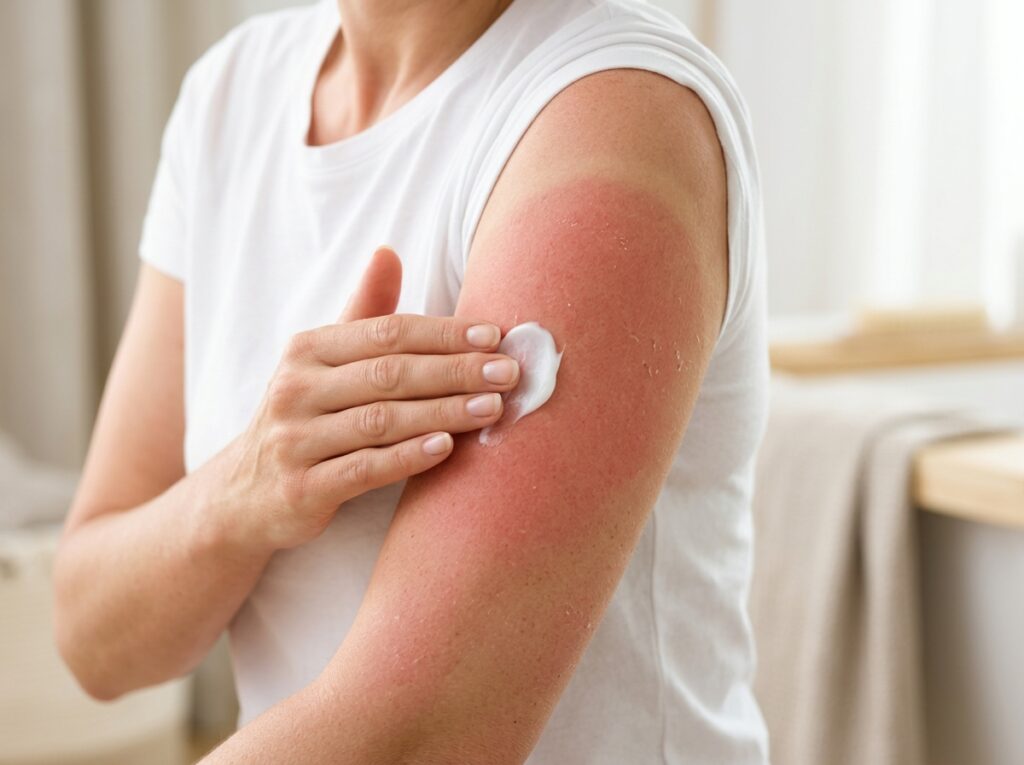
- First-degree burns — affect only the outer layer of skin (epidermis). Red, painful, dry, no blisters. Sunburn is the classic example.
- Second-degree burns — reach the second skin layer (dermis). Red, blistered, wet-looking, intensely painful.
- Third-degree burns — destroy all skin layers. May appear white, brown, or charred. Paradoxically less painful because nerve endings are destroyed.
Ointments are appropriate for first-degree and minor second-degree burns only. Third-degree burns and any burn larger than 3 inches (7–8 cm) require immediate emergency medical care — no ointment will help, and some may cause harm.
The 8 Best Burn Ointments
1. Silver Sulfadiazine (SSD) Cream
The gold standard for burn wound care.
Silver sulfadiazine has been the most widely used burn treatment in clinical settings for over 50 years. It combines the antimicrobial power of silver with a sulfonamide antibiotic, creating a broad-spectrum barrier against the bacteria most likely to infect open burn wounds — including Pseudomonas aeruginosa and Staphylococcus aureus.
Best for: Second-degree burns, infected burns, burns at high risk of infection.
How to use: Apply a thin layer (about 1/16 inch thick) to the clean burn once or twice daily. Cover with a non-stick sterile dressing.
Note: Requires a prescription in most countries. Not recommended for use on the face, in pregnancy, or in newborns.
2. Bacitracin Ointment
The most practical over-the-counter option for minor burns.
Bacitracin is a topical antibiotic that prevents bacterial infection in minor burns and keeps the wound moist — both of which support faster healing. It is widely available, inexpensive, and well-tolerated by most skin types.
Best for: First-degree burns and small second-degree burns.
How to use: Apply a thin layer to the affected area and cover with a sterile bandage. Reapply once or twice daily after gently cleaning the wound.
Note: If redness or a rash develops after use, discontinue — it may indicate an allergy to bacitracin, which is more common than most people realize.
3. Aloe Vera Gel (Medical Grade)
Nature’s most evidence-backed burn remedy.
Aloe vera is not just a folk remedy — it has genuine clinical support. A systematic review published in the Journal of Emergency Nursing found that aloe vera healed first and second-degree burns significantly faster than conventional treatments in several trials. It works by reducing inflammation, moisturizing the wound, and inhibiting bacterial growth.
Best for: Sunburn and first-degree burns.
How to use: Apply pure aloe vera gel generously to the burn. Leave uncovered if possible. Reapply every few hours as needed for comfort.
Note: Use medical-grade or pure aloe gel — not cosmetic products with added fragrances, alcohol, or colorants, which can irritate burned skin.
4. Mafenide Acetate (Sulfamylon)
The specialist’s choice for deep or complex burns.
Mafenide acetate is a prescription-only antimicrobial cream used primarily in hospital burn units. Unlike silver sulfadiazine, it penetrates eschar (the dead tissue that forms over deep burns), making it effective in situations where surface-only treatments fall short.
Best for: Deep second-degree and third-degree burns under professional supervision.
How to use: Applied by healthcare professionals — not intended for home use.
Note: Can cause a burning sensation upon application and may affect acid-base balance with extensive use. Strictly a clinical treatment.
5. Petroleum Jelly (Vaseline)
The most underrated option in any first aid kit.
Plain petroleum jelly may be the least glamorous item on this list, but studies — including research published in JAMA Dermatology — have found it performs as well as antibiotic ointments for minor wound healing while carrying virtually no risk of allergic reaction.
Best for: First-degree burns and small, clean minor burns with low infection risk.
How to use: Apply a thin layer and cover with a non-stick dressing. Change the dressing daily or when wet or dirty.
Note: Petroleum jelly does not have antibiotic properties — if infection risk is higher, choose bacitracin or silver sulfadiazine instead.
6. Honey-Based Dressings (Medical Manuka Honey)
An ancient remedy with modern clinical validation.
Medical-grade Manuka honey — not the kind from your kitchen — has been the subject of serious clinical research in wound and burn care. It creates an antimicrobial, moist healing environment that promotes tissue regeneration and reduces scarring. A Cochrane review found it healed superficial burns faster than conventional dressings in multiple trials.
Best for: Superficial second-degree burns, burns prone to infection.
How to use: Apply medical-grade honey dressings (available from medical suppliers) directly to the burn and cover. Change every 2 to 3 days.
Note: Kitchen honey is not sterile and should never be used on burns. Only medical-grade products carry the clinical evidence.
7. Hydrocortisone Cream (Low Potency)
The right choice for burn-related inflammation and sunburn.
Low-potency hydrocortisone cream (0.5%–1%) reduces inflammation, redness, and the intense itching that often accompanies healing burns — particularly sunburn. It does not treat the burn itself but significantly improves comfort during recovery.
Best for: Sunburn, minor first-degree burns, burn itch during healing phase.
How to use: Apply a thin layer to the affected area up to twice daily for no more than 7 consecutive days.
Note: Never apply hydrocortisone to open wounds, blistered skin, or second-degree burns — it can impair healing and increase infection risk.
8. Cerium Nitrate–Silver Sulfadiazine (Flammacerium)
The advanced combination therapy for serious burns.
Flammacerium combines silver sulfadiazine with cerium nitrate, an additional antimicrobial agent. Research has shown it reduces bacterial colonization more effectively than silver sulfadiazine alone and may reduce the need for skin grafting in some cases.
Best for: Extensive or severe burns in clinical settings.
How to use: Applied exclusively by burn care professionals. Not available for home use.
Note: Included here because patients with serious burns may encounter it during treatment — understanding what is being applied matters.
What to Never Put on a Burn
Equally important as knowing what works is knowing what to avoid:
- Butter or cooking oils — trap heat in the tissue and dramatically increase infection risk
- Toothpaste — a persistent myth; it contains irritants that worsen burns
- Ice or ice water — causes vasoconstriction and can deepen tissue damage; cool (not cold) running water for 10–20 minutes is the correct first step
- Egg whites — raw eggs carry Salmonella and have no healing benefit
- Fluffy cotton — fibers stick to raw wounds and are extremely painful to remove
When to Skip the Ointment and Go to the ER
No ointment replaces emergency care. Seek immediate medical attention if:
- The burn covers a large area of the body (larger than the palm of your hand)
- The burn is on the face, hands, feet, genitals, or over a major joint
- The burn appears white, brown, or black — or is painless despite looking serious
- The burn was caused by electricity or chemicals
- The victim is a child under 5 or an adult over 60
- Signs of infection develop: increasing redness, warmth, swelling, pus, or fever
The Bottom Line
The right ointment for a burn depends entirely on the type, size, and location of the injury. For minor first-degree burns and sunburn, aloe vera, petroleum jelly, or bacitracin will serve you well. For more serious wounds, silver sulfadiazine and medical honey dressings offer clinical-grade protection.
Stock your first aid kit thoughtfully, act quickly, and never underestimate a burn that doesn’t look “that bad.” With the right care applied at the right time, most minor burns heal cleanly and completely.
This article is for informational purposes only and does not replace professional medical advice. Seek immediate medical attention for severe, large, or worsening burns.