
Somewhere along the way, “low carb” became synonymous with “keto.” And that equation scared off millions of people who could have genuinely benefited from reducing their carbohydrate intake — but weren’t ready to count every gram, give up fruit forever and live on bacon and butter.
Here’s what most people don’t know: the ketogenic diet is just one version of low carb — and one of the most extreme ones at that. A well-structured low-carb approach doesn’t require ketosis, doesn’t demand obsessive macro tracking and doesn’t mean you’ll never eat a piece of fruit again.
It simply means eating fewer refined carbohydrates, more protein, more healthy fats and more real food. And the science shows that even moderate carb reduction — without going anywhere near ketosis — delivers significant benefits for weight loss, blood sugar control, energy and metabolic health. You don’t need to go keto to change your body. You just need to understand how low carb actually works.
What Is a Low-Carb Diet
A low-carb diet is any eating pattern that significantly reduces carbohydrate intake compared to a standard Western diet — which typically delivers 45% to 65% of total calories from carbs, most of them refined.
There’s no single definition, but common thresholds are:
- Moderate low carb: 100–150g of carbs per day — eliminates refined carbs, keeps whole foods
- Low carb: 50–100g per day — removes most grains, limits fruit and starchy vegetables
- Very low carb / ketogenic: under 50g per day — induces ketosis
Most people get meaningful results from moderate or standard low carb — without ever approaching ketosis. The key shift isn’t the specific number. It’s the type of carbohydrates being replaced.
How It Works
When you eat carbohydrates, your body breaks them down into glucose, which triggers the release of insulin — the hormone that shuttles glucose into cells for energy or stores it as fat.
Refined carbohydrates — white bread, pasta, sugar, processed snacks — are digested rapidly, causing sharp spikes in blood glucose and insulin. These spikes are followed by crashes that trigger hunger again within hours, creating a cycle of eating, craving and overeating that’s hard to break.
When you reduce carb intake — especially refined carbs — several things happen:
- Insulin levels drop and stabilize
- The body begins accessing stored fat for energy more readily
- Blood sugar becomes more consistent throughout the day
- Hunger and cravings decrease significantly
- Energy levels stabilize — no more afternoon crashes
You don’t need to be in ketosis for these benefits to occur. Simply removing refined carbohydrates and replacing them with protein, healthy fats and fiber-rich vegetables is enough to trigger measurable metabolic improvements.
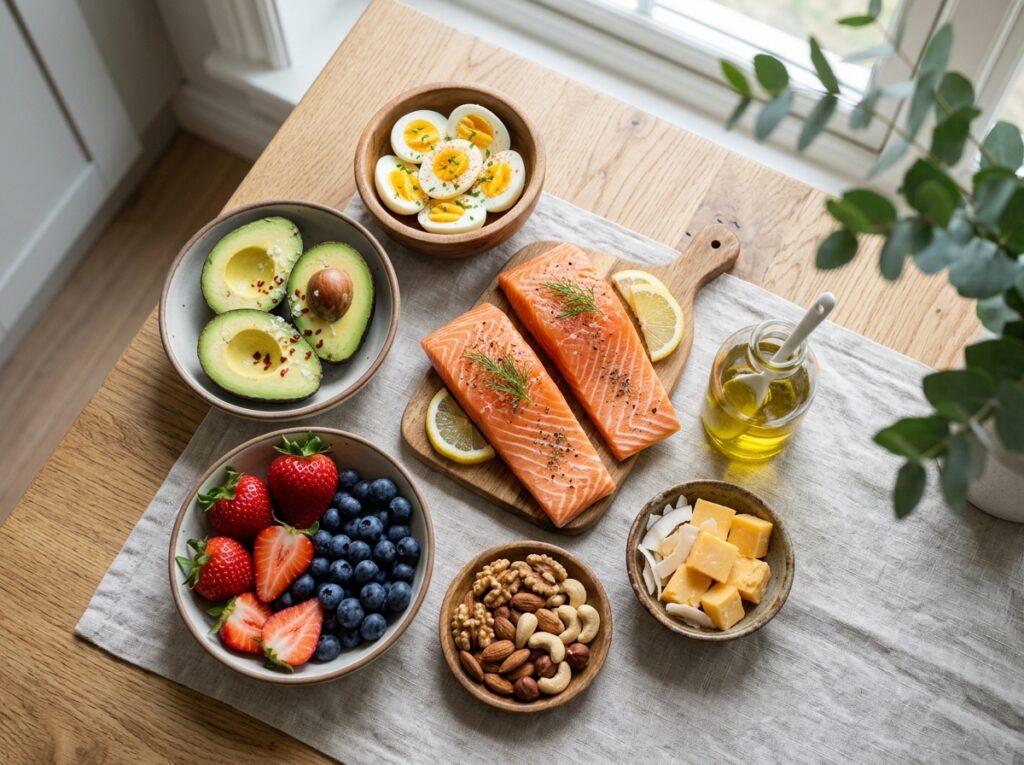
Foods to Eat on a Low-Carb Diet
Proteins — the foundation
- Eggs — whole, in any preparation
- Chicken, turkey, duck — preferably with skin
- Beef, pork, lamb — all cuts
- Fatty fish — salmon, sardines, tuna, mackerel
- Shrimp and seafood
- Greek yogurt, cottage cheese, ricotta
Healthy fats
- Avocado and avocado oil
- Extra virgin olive oil
- Butter and ghee
- Nuts and seeds — walnuts, almonds, macadamia, chia, flaxseed
- Full-fat coconut milk
Low-carb vegetables — unlimited
- Leafy greens — spinach, arugula, kale, lettuce
- Broccoli, cauliflower, Brussels sprouts
- Zucchini, cucumber, celery
- Asparagus, mushrooms, bell peppers
- Green beans, cabbage
Low-carb fruits — in moderation
- Berries — strawberries, blueberries, raspberries
- Avocado (yes, it’s a fruit)
- Olives
Dairy — full fat, unsweetened
- Hard cheeses — cheddar, parmesan, gouda
- Full-fat Greek yogurt (plain)
- Heavy cream
Foods to Avoid or Limit
Refined carbohydrates — eliminate:
- White bread, white rice, regular pasta
- Pastries, cakes, cookies, crackers
- Sugary cereals and instant oats
- Candy, soda, fruit juice, energy drinks
- Packaged snacks and ultraprocessed foods
Starchy vegetables — limit:
- Potatoes, sweet potatoes, corn, peas, beets
- Can be included occasionally in moderate low carb
Fruits — limit to low-sugar varieties:
- Bananas, grapes, mangoes, pineapple and dried fruits are high in sugar
- Berries are the best low-carb fruit option
Grains — reduce significantly:
- Wheat, oats, rice, quinoa can be included in small amounts on moderate low carb
5-Day Low-Carb Meal Plan
Day 1
Breakfast: 3-egg omelet with spinach, mushrooms and cheddar cheese
Lunch: Grilled chicken salad with avocado, cucumber, cherry tomatoes, arugula and olive oil
Dinner: Baked salmon with roasted broccoli and garlic butter
Snack: A handful of walnuts and a few strawberries
Day 2
Breakfast: Scrambled eggs with bacon and sliced avocado
Lunch: Tuna bowl — canned tuna, cucumber, avocado, arugula, olive oil and lemon
Dinner: Beef stir-fry with zucchini, bell peppers and soy sauce over cauliflower rice
Snack: Full-fat Greek yogurt with blueberries
Day 3
Breakfast: Greek yogurt with raspberries, chia seeds and crushed almonds
Lunch: Turkey lettuce wraps with avocado, tomato and mustard
Dinner: Baked chicken thighs with roasted cauliflower and a side salad
Snack: Boiled eggs with salt and pepper
Day 4
Breakfast: 2-ingredient banana-egg pancakes — 1 ripe banana mashed with 2 eggs, cooked in butter
Lunch: Grilled salmon with spinach sautéed in garlic and olive oil
Dinner: Ground beef with zucchini, tomato and melted cheese
Snack: Macadamia nuts and a square of 85% dark chocolate
Day 5
Breakfast: Smoked salmon with cream cheese on cucumber slices
Lunch: Chicken caesar salad without croutons — romaine, parmesan, grilled chicken, caesar dressing
Dinner: Pork tenderloin with roasted asparagus and mushrooms in butter
Snack: Cottage cheese with cherry tomatoes and herbs
3 Easy Low-Carb Recipes
Cauliflower Fried Rice
Time: 20 minutes | Serves: 2
Ingredients:
- 1 small head of cauliflower, grated or processed into rice-sized pieces
- 2 eggs
- 2 tablespoons soy sauce (or coconut aminos)
- 1 cup mixed vegetables — peas, carrots, green onion
- 1 tablespoon sesame oil or butter
- Garlic and ginger to taste
Instructions:
Sauté garlic and ginger in oil for 1 minute. Add vegetables and cook for 3 minutes. Push to the side and scramble the eggs in the same pan. Add cauliflower rice and soy sauce, mix everything together and cook for 5 to 7 minutes until tender. Finish with sesame oil and green onion.
Why it works: zero guilt, all the comfort of fried rice with a fraction of the carbs.
Zucchini Noodles with Creamy Avocado Sauce
Time: 15 minutes | Serves: 2
Ingredients:
- 2 medium zucchinis, spiralized into noodles
- 1 ripe avocado
- 2 tablespoons extra virgin olive oil
- Juice of 1 lemon
- 1 clove garlic
- Salt, pepper and fresh basil
Instructions:
Blend avocado, olive oil, lemon juice, garlic, salt and pepper until smooth and creamy. Lightly sauté zucchini noodles in olive oil for 2 minutes — they should stay slightly firm. Toss with avocado sauce and top with fresh basil and parmesan if desired.
Why it works: ready in 15 minutes, feels indulgent and is packed with healthy fats and fiber.
Sheet Pan Chicken Thighs with Roasted Vegetables
Time: 35 minutes | Serves: 2
Ingredients:
- 4 bone-in, skin-on chicken thighs
- 1 head of broccoli, cut into florets
- 1 zucchini, sliced
- 1 red bell pepper, sliced
- Olive oil, garlic powder, paprika, Italian herbs, salt and pepper
Instructions:
Preheat oven to 425°F (220°C). Toss vegetables in olive oil and spread on a baking sheet. Season chicken with olive oil, garlic powder, paprika, herbs, salt and pepper. Place chicken skin-side up on top of vegetables. Roast for 30 to 35 minutes until chicken skin is golden and crispy and internal temperature reaches 165°F. No pots, no fuss.
Why it works: one pan, minimal prep, maximum flavor and a complete low-carb meal in under 40 minutes.
How to Start — Without Feeling Overwhelmed
Week 1: Remove the obvious offenders
Don’t try to overhaul everything at once. Start by eliminating sugary drinks, white bread, white rice and packaged snacks. Replace them with water, eggs, vegetables and protein. That alone will produce noticeable changes.
Week 2: Restructure your meals
Build every meal around a protein source. Add vegetables and healthy fat. If you want a carb, choose a whole food option — sweet potato, quinoa or legumes — in a controlled portion.
Week 3: Stock your kitchen for success
A low-carb kitchen doesn’t fail at the dinner table — it fails in the pantry. Make sure the 17 low-carb staples are always available so that the right choice is always the easiest choice.
What to expect:
- Days 1–3: possible fatigue as the body adjusts — drink more water and add electrolytes
- Week 1–2: noticeable reduction in bloating and water weight
- Week 3–4: steady fat loss begins, energy stabilizes, cravings decrease significantly
- Month 2 onwards: metabolic adaptation complete, results become consistent
Who Benefits Most from Low Carb
- People with insulin resistance or prediabetes
- Those who struggle with constant hunger and cravings
- Anyone with significant abdominal fat
- People who feel energy crashes after meals
- Those who want a sustainable eating pattern without extreme restriction
Conclusion
Low carb doesn’t have to be keto. It doesn’t have to be extreme, obsessive or joyless. At its core, it’s simply about eating less of the foods that spike your blood sugar and more of the foods that nourish, satisfy and fuel your body efficiently.
The meal plan is here. The recipes are here. The shopping list is clear. What’s left is the decision to start — and the knowledge that you don’t have to be perfect to see results. You just have to be consistent.
Know someone who wants to try low carb but thinks it means going full keto? Share this article — it might be exactly what changes their mind.