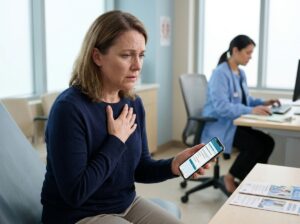

The World Health Organization estimates that 1.28 billion adults worldwide currently have hypertension. Of those, approximately 46% are unaware of their condition. They have not been diagnosed. They are not being treated. Their arteries, kidneys, heart, and brain are absorbing cumulative damage from a condition that produces no dramatic warning — until it does, and by then the warning is a stroke, a heart attack, or a hypertensive emergency.
This is why hypertension earned the name “the silent killer.” But the silence is not complete. Cardiologists and nephrologists consistently report that many patients, looking back after diagnosis, recognize symptoms that had been present for months or years — dismissed as stress, aging, fatigue, or coincidence.
The problem is not that the body sends no signals. It is that the signals it sends are easy to attribute to something else.

Why Hypertension Is Mostly Silent — and Partially Not
Blood pressure is the force exerted by circulating blood against artery walls. When that force is chronically elevated, it damages the endothelium — the thin inner lining of arteries — gradually and without pain. The arteries stiffen. The heart works harder. Microvasculature in the kidneys, eyes, and brain sustains damage over years before any organ reaches the threshold that produces noticeable symptoms.
This is the genuine silence of hypertension: the progressive damage it causes is below the threshold of perception for most of its duration. A blood pressure of 145/95 mmHg does not feel like anything in the moment. Sustained over five years, it meaningfully increases the risk of heart failure, stroke, chronic kidney disease, and retinal damage.
The partial exception is what happens at the higher end of the range, or when blood pressure spikes acutely — and a set of subtle, non-specific symptoms that correlate with chronically elevated pressure often appear long before a crisis.
The 8 Subtle Symptoms Worth Knowing
1. Morning Headaches — Particularly at the Back of the Head
A headache that is present upon waking, located at the back or base of the skull (occipital region), and resolves within an hour or two of getting up is one of the more specific — if still non-definitive — symptom patterns associated with hypertension. Blood pressure follows a circadian rhythm, rising sharply in the early morning hours as the body prepares for waking. In people with hypertension, this morning surge can be significant enough to trigger a pressure-related headache.
This pattern differs from tension headaches (which typically present as a band around the forehead and temples) and migraines (which are usually unilateral and accompanied by photophobia or nausea). A recurrent morning occipital headache without a clear cause warrants a blood pressure check.
2. Dizziness and Lightheadedness
Dizziness related to hypertension is somewhat counterintuitive — it is more commonly associated with low blood pressure — but it occurs in two specific hypertension contexts. First, when blood pressure is acutely very elevated, the sudden increase in cerebral blood flow can produce a sensation of pressure, fullness, or lightheadedness. Second, in patients on antihypertensive medication, dizziness frequently indicates that blood pressure is being lowered too aggressively or too rapidly — a side effect that requires dose adjustment rather than discontinuation.
Persistent or recurrent dizziness without a clear vestibular or neurological cause in an adult over 40 should prompt blood pressure measurement.
3. Visual Disturbances
The retinal blood vessels are among the smallest and most vulnerable in the body, and they are the only blood vessels that can be directly observed without imaging. Chronic hypertension causes hypertensive retinopathy — thickening of retinal arteriole walls, arteriovenous nicking, and in advanced cases, retinal hemorrhages and swelling of the optic disc.
Before these structural changes reach the level detectable on examination, patients sometimes report blurred vision, visual flickering, or brief episodes where vision dims momentarily. These are not diagnostic for hypertension — they have many causes — but in someone with known risk factors, they warrant both an eye examination and blood pressure monitoring.
4. Nosebleeds
Spontaneous nosebleeds (epistaxis) are associated with hypertension primarily at significantly elevated blood pressure levels — typically above 160/100 mmHg. The association is weaker than commonly believed; most nosebleeds in the general population are not caused by hypertension. However, a nosebleed that occurs without trauma, is difficult to stop, or recurs in the absence of a local nasal cause (dryness, irritation, anticoagulant use) should prompt a blood pressure check rather than being attributed to air quality or seasonal changes.
5. Shortness of Breath on Exertion
Hypertension increases the workload of the left ventricle — the chamber that pumps oxygenated blood to the body. Over years, the heart muscle thickens in response (left ventricular hypertrophy), and its ability to fill and pump efficiently progressively impairs. The earliest functional consequence is often reduced exercise tolerance: shortness of breath or unusual fatigue during activities that were previously effortless.
This symptom is frequently attributed to deconditioning, weight gain, or aging. In someone who has not been active and notices gradual reduction in their capacity, those explanations may be valid. In someone whose activity level has not changed but whose capacity has declined, it warrants evaluation — including blood pressure measurement.
6. Facial Flushing
Facial flushing — a temporary reddening of the face accompanied by warmth — occurs when surface blood vessels dilate. It can be triggered by temperature, alcohol, spicy food, and emotional stress. It can also occur during blood pressure spikes. Flushing is not a reliable indicator of hypertension — most people who flush regularly have normal blood pressure — but recurrent flushing associated with headache, neck discomfort, or visual changes in someone with risk factors should not be dismissed.
7. Tinnitus — Ringing or Pulsing in the Ears
A pulsatile tinnitus — a rhythmic ringing, whooshing, or throbbing in the ears that synchronizes with the heartbeat — is a recognized symptom of hypertension and large vessel disease. It reflects turbulent blood flow through arteries near the ear. Non-pulsatile tinnitus (a constant tone) is more often caused by hearing loss, noise exposure, or medications. The distinction matters: pulsatile tinnitus specifically warrants vascular evaluation.
8. Fatigue and Difficulty Sleeping
Chronic hypertension and sleep apnea have a bidirectional relationship — each worsens the other. Sleep apnea triggers repeated sympathetic nervous system activation overnight, raising blood pressure. Elevated blood pressure disrupts sleep architecture. The result is persistent fatigue, unrefreshed sleep, and difficulty concentrating that patients consistently attribute to stress or workload rather than a cardiovascular condition.
Adults who snore, wake frequently, or feel unrested despite adequate sleep hours — and have other hypertension risk factors — benefit from both a blood pressure assessment and evaluation for obstructive sleep apnea.
What the Numbers Actually Mean
Blood pressure is recorded as two numbers: systolic (pressure during heartbeat) over diastolic (pressure between beats), measured in millimeters of mercury (mmHg).
| Category | Systolic | Diastolic |
|---|---|---|
| Normal | Below 120 | Below 80 |
| Elevated | 120–129 | Below 80 |
| Stage 1 Hypertension | 130–139 | 80–89 |
| Stage 2 Hypertension | 140 or higher | 90 or higher |
| Hypertensive Crisis | Above 180 | Above 120 |
The American College of Cardiology and American Heart Association lowered the hypertension threshold from 140/90 to 130/80 in 2017 — a change that reclassified millions of adults from “elevated” to “Stage 1 hypertension” and significantly expanded the population for whom lifestyle intervention and potential pharmacotherapy are recommended.
A single elevated reading does not establish hypertension. Blood pressure varies throughout the day in response to activity, stress, caffeine, and posture. Diagnosis requires elevated readings on at least two separate occasions, ideally measured after five minutes of rest with the arm supported at heart level.
Who Should Measure More Frequently
Annual measurement at a routine medical visit is insufficient for early detection in high-risk adults. More frequent home monitoring — available with validated automated cuffs — is recommended for adults with:
- Family history of hypertension or cardiovascular disease
- Age over 40
- BMI above 25
- Diabetes or prediabetes
- Chronic kidney disease
- High dietary sodium intake
- Sedentary lifestyle
Home blood pressure monitors should be validated devices (check the British and Irish Hypertension Society validated device list or American Medical Association recommendation list). Wrist monitors are less accurate than upper-arm cuffs for most adults.
The most important point is simple: hypertension cannot be felt at most of the pressures where it is damaging. The only way to know is to measure. A reading takes 60 seconds. The damage it prevents can last a lifetime.
This article is for informational purposes only and does not replace professional medical advice. The symptoms described have many possible causes, most of which are benign. Only a qualified healthcare provider can diagnose hypertension and recommend appropriate treatment. If you experience severe headache, vision changes, chest pain, or difficulty breathing, seek emergency medical care immediately.