
Most people think of their skin as surface. Something to moisturize, protect from the sun, and occasionally worry about when a new spot appears. What they don’t realize is that the skin is one of the body’s most sophisticated communication systems — constantly broadcasting information about what is happening far beneath it.
Dermatologists and internal medicine physicians have known for decades that certain skin changes precede, accompany, or signal internal conditions — sometimes appearing weeks or months before any other symptom develops. The skin does not lie. It does not wait for a diagnosis. It simply shows what it knows, in the only language it has.
The problem is that most of us were never taught to read it. This article changes that.
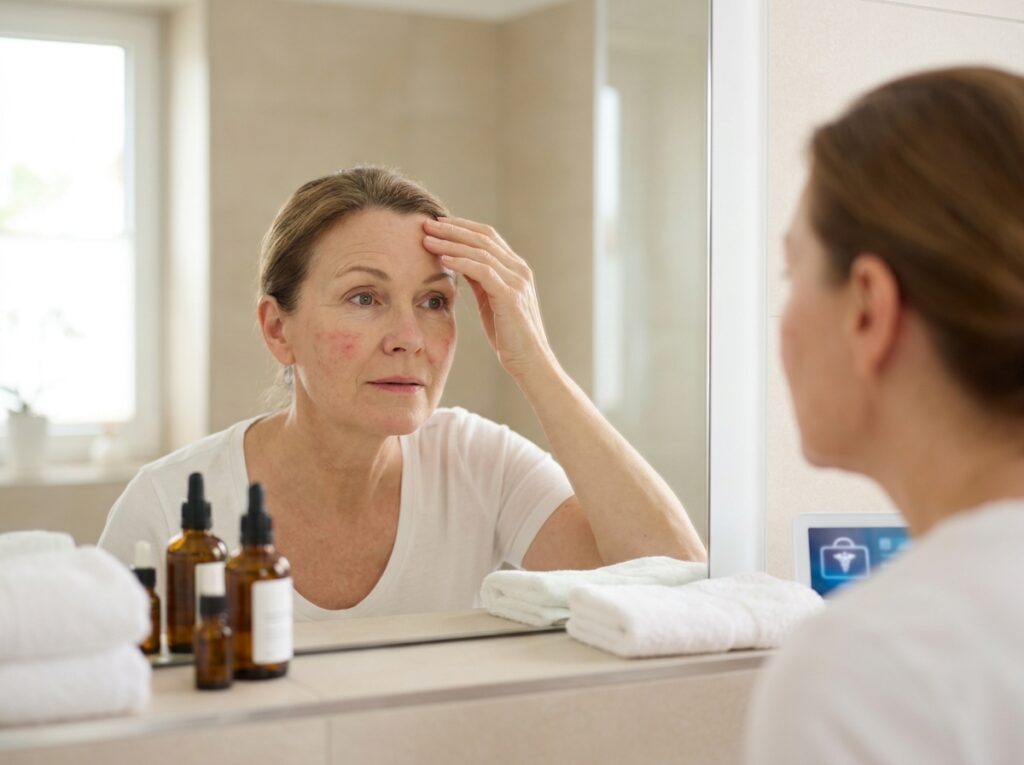
Your Skin Has Been Trying to Tell You Something — Most People Just Don’t Know How to Listen
Most people think of their skin as surface. Something to moisturize, protect from the sun, and occasionally worry about when a new spot appears. What they don’t realize is that the skin is one of the body’s most sophisticated communication systems — constantly broadcasting information about what is happening far beneath it.
Dermatologists and internal medicine physicians have known for decades that certain skin changes precede, accompany, or signal internal conditions — sometimes appearing weeks or months before any other symptom develops. The skin does not lie. It does not wait for a diagnosis. It simply shows what it knows, in the only language it has.
The problem is that most of us were never taught to read it.
This article changes that.
Why the Skin Speaks Before the Body Breaks Down
To understand why the skin warns you first, you need to understand what the skin actually is.
The skin is the body’s largest organ — covering roughly 1.7 to 2 square meters of surface area in the average adult. It is directly connected to every major internal system: the liver, kidneys, thyroid, immune system, gut, and cardiovascular network all influence skin behavior in real, visible ways.
When something goes wrong internally, the body prioritizes its vital organs — the heart, brain, and lungs — diverting resources away from the skin. This is why the skin often shows the first signs of deficiency, inflammation, or systemic disease: it is the first place the body pulls back from when it is struggling elsewhere.
Think of it less as the skin “getting sick” and more as the skin being the first place to stop receiving what it needs — and making that visible.
12 Skin Signals Worth Paying Attention To
1. Persistent Yellowing of the Skin or Eyes (Jaundice)
What it may signal: Liver disease, bile duct obstruction, hemolytic anemia.
Jaundice occurs when bilirubin — a yellow pigment produced by the breakdown of red blood cells — accumulates in the blood instead of being processed by the liver. The yellow tint appears first in the whites of the eyes, then in the skin.
Even mild, intermittent yellowing warrants medical evaluation. It is one of the skin’s clearest and most direct internal warnings.
2. Darkening of Skin Folds (Acanthosis Nigricans)
What it may signal: Insulin resistance, prediabetes, type 2 diabetes, hormonal disorders.
Velvety, dark patches appearing in the neck, armpits, groin, or under the breasts are not a hygiene issue — they are a metabolic signal. Acanthosis nigricans is strongly associated with elevated insulin levels and is often present years before a diabetes diagnosis is made.
If you notice these patches on yourself or a family member, a fasting blood glucose test is worth requesting.
3. Pale or Ashy Skin Tone
What it may signal: Anemia, iron deficiency, B12 deficiency, internal bleeding, kidney disease.
Hemoglobin — the protein in red blood cells that carries oxygen — gives skin its color. When hemoglobin levels drop, skin loses its warmth and takes on a pale, washed-out, or grayish quality. Check the inner lower eyelid: if the normally pink tissue looks white or very pale, anemia is a strong possibility.
4. Unexplained Itching Without a Rash (Pruritus)
What it may signal: Liver disease, kidney failure, thyroid disorders, lymphoma, polycythemia vera.
Generalized itching with no visible skin cause is one of the most underreported internal warning signs. The liver, kidneys, and thyroid all produce or process compounds that, when dysregulated, can cause profound skin irritation through nerve stimulation and bile salt accumulation.
Persistent, unexplained itching — especially if worse at night or over large areas of the body — deserves blood work, not just a prescription for antihistamines.
5. New or Changing Hair Growth Patterns
What it may signal: Polycystic ovary syndrome (PCOS), thyroid dysfunction, adrenal disorders, hormonal imbalance.
Unexpected facial hair in women, thinning at the temples, loss of the outer third of the eyebrows, or diffuse hair shedding are all skin-adjacent signals with significant hormonal implications. The outer eyebrow loss pattern in particular is classically associated with hypothyroidism — a condition affecting millions of people who remain undiagnosed.
6. Butterfly-Shaped Rash Across the Cheeks and Nose
What it may signal: Systemic lupus erythematosus (SLE).
The malar rash — a red or pink rash spreading across both cheeks and the bridge of the nose in a butterfly pattern — is one of the most recognizable diagnostic skin signs in medicine. It appears in approximately 50% of lupus cases and often precedes other systemic symptoms. It is frequently dismissed as rosacea or sunburn, delaying diagnosis by months or years.
7. Small Yellow Deposits Around the Eyes (Xanthelasma)
What it may signal: High cholesterol, lipid metabolism disorders, cardiovascular risk.
Xanthelasma are soft, yellowish plaques that form on or around the eyelids when cholesterol deposits accumulate beneath the skin. They are painless and often dismissed as cosmetic. But studies show that people with xanthelasma have a significantly elevated risk of cardiovascular events — even when their measured cholesterol appears normal.
8. Slow-Healing Wounds or Sores
What it may signal: Diabetes, peripheral artery disease, immune suppression, nutritional deficiency.
The skin’s ability to heal itself is directly tied to circulation, immune function, and nutritional status. Cuts or sores that take unusually long to close — particularly on the lower legs and feet — are a red flag for poor circulation or elevated blood sugar, both of which impair the wound-healing cascade.
9. Redness, Flushing, or Visible Broken Capillaries
What it may signal: Rosacea, hypertension, liver disease, carcinoid syndrome, perimenopause.
Persistent facial redness or visible thread veins can reflect purely dermatological conditions — but they can also be the face’s way of signaling blood pressure changes, liver stress, or hormonal shifts. Flushing episodes that occur without obvious triggers deserve investigation beyond topical treatment.
10. Thick, Dry, or Flaking Skin on Elbows and Knees
What it may signal: Hypothyroidism, psoriasis, nutritional deficiencies (especially zinc and essential fatty acids).
The thyroid regulates skin cell turnover. When thyroid function slows, cell renewal slows with it — producing rough, thickened patches particularly on high-pressure areas like elbows, knees, and heels. Isolated dryness that doesn’t respond to moisturizer is worth pairing with a thyroid panel.
11. Nail Changes — Pitting, Clubbing, or Discoloration
What it may signal: Psoriasis, respiratory disease, heart conditions, fungal infection, nutritional deficiency.
Nails are skin derivatives — and they carry significant diagnostic weight. Nail pitting (small depressions in the nail surface) is strongly associated with psoriasis. Clubbing — where the fingertips and nails curve downward like an inverted spoon — is associated with chronic low oxygen levels and may signal lung or heart disease. White, yellow, or brown discoloration each carry their own clinical implications.
12. Sudden Increase in Skin Tags
What it may signal: Insulin resistance, prediabetes, hormonal imbalance.
Skin tags — small, soft, flesh-colored growths that appear in skin folds — are harmless individually. But a sudden proliferation of them, particularly in the neck, armpits, and groin, mirrors the same metabolic signals as acanthosis nigricans. Research suggests a meaningful association between multiple skin tags and elevated insulin levels.
How to Listen to Your Skin — Practically
You don’t need a medical degree to begin paying attention. Here is a simple habit worth building:
Once a month, in good light, examine:
- Your face — color, texture, new spots, redness, swelling
- Your neck and armpits — any darkening, tags, or new lumps
- Your hands and nails — color, texture, healing speed
- Your lower legs and feet — any sores, discoloration, or swelling
- Your eyes — the whites, the eyelids, and the skin immediately around them
Note anything that is new, changing, or persistent for more than 2 to 3 weeks. Then bring it to a doctor — not with alarm, but with the confidence of someone who has learned to pay attention.
When to See a Doctor Without Waiting
Some skin signals warrant prompt medical evaluation rather than watchful waiting:
- Jaundice of any degree
- Generalized itching with no rash lasting more than 2 weeks
- A wound that hasn’t begun healing within 2 weeks
- Any rash accompanied by fever, joint pain, or fatigue
- Sudden changes in multiple nails simultaneously
- Skin changes in someone with a known chronic condition
The Bottom Line
Your skin is not vanity. It is not surface. It is a living, dynamic organ that reflects the state of everything beneath it — and it begins showing that reflection long before any blood test or scan catches up.
Learning to read your skin is not about anxiety or self-diagnosis. It is about developing the kind of body literacy that puts you in the conversation with your doctor earlier, when options are greatest and outcomes are best.
Your skin has been talking this whole time. It is worth learning what it has been saying.
This article is for informational purposes only and does not replace professional medical advice. If you notice persistent or concerning skin changes, consult a qualified dermatologist or physician.