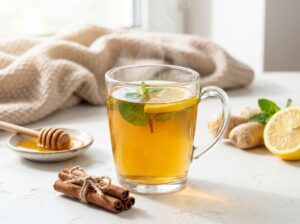

There’s a scene many people recognize: grandma in the kitchen, right before bed, preparing that herbal tea made from plants grown in the backyard. Chamomile, lemon balm, passionflower. No written recipe, no exact measurements — it was tradition, habit, and care passed down from generation to generation.
For decades, modern medicine viewed these rituals with skepticism. Herbal tea? Just a placebo. But science kept advancing, studies were published, and today we know something remarkable: your grandmother was right — with far more scientific support than she could ever have imagined.
For women over 50, especially those going through or already past menopause, sleep changes dramatically. And a simple tea made with the right three ingredients can become a powerful ally during this stage of life — without dependency, without major side effects, and without requiring a prescription.
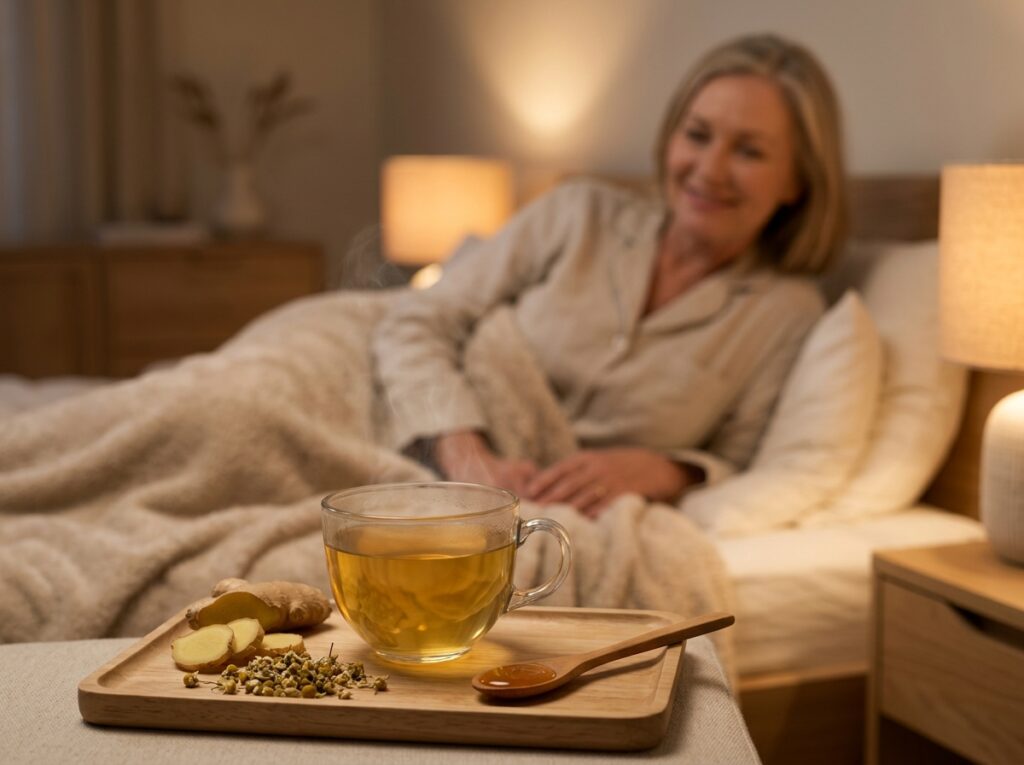
Why Sleep Changes After 50
Before talking about the tea itself, it’s important to understand what happens to sleep during midlife — because the problem is not “all in your head.” It’s physiology.
As perimenopause and menopause arrive, estrogen and progesterone levels decline significantly. These hormones directly affect sleep quality:
- Progesterone has a naturally sedative effect. As it drops, light sleep increases while deep sleep decreases.
- Estrogen helps regulate body temperature and serotonin production — the neurotransmitter that precedes melatonin. As estrogen declines, nighttime hot flashes appear and repeatedly interrupt sleep.
- Melatonin production also naturally decreases with age.
The result is a perfect storm: difficulty falling asleep, waking up multiple times during the night, shallow sleep, and persistent exhaustion in the morning. Many women turn to sleep medications, which may work short term but often create dependency and negatively affect natural sleep cycles.
This is where herbal medicine comes in — not as a replacement for medical treatment, but as a safe, natural support for women who want better sleep without adding yet another medication to their routine.
The 3 Ingredients in the Tea
1. Chamomile (Matricaria chamomilla)
Chamomile is probably the most studied medicinal herb in the world when it comes to sleep. Its main active compound is apigenin, a flavonoid that binds to benzodiazepine receptors in the brain — the same receptors activated by anti-anxiety and sleep-inducing medications like diazepam.
The difference is that apigenin works gently, without causing dependency or excessive sedation. It reduces anxiety, relaxes the muscles, and helps the body transition into sleep.
A study published in the Journal of Advanced Nursing evaluated postpartum women suffering from sleep deprivation and found that chamomile tea significantly improved sleep quality and reduced mild depressive symptoms. Other studies involving older adults showed improvements in falling asleep faster and fewer nighttime awakenings.
For women over 50, chamomile offers an additional benefit: its anti-inflammatory compounds may help reduce the intensity of hot flashes, one of the leading causes of sleep disruption during menopause.
2. Lemon Balm (Melissa officinalis)
Lemon balm works mainly on the central nervous system by reducing the activity of GABA-transaminase — the enzyme responsible for breaking down GABA, the brain’s primary calming neurotransmitter. In practical terms: it helps the brain “turn off” racing thoughts that interfere with sleep.
Research shows that lemon balm has measurable anti-anxiety effects, especially in situations involving stress and mild to moderate anxiety — exactly the state many women experience at the end of a long day.
A study published in the journal Nutrients showed that combining lemon balm with valerian significantly reduced insomnia symptoms in menopausal women, with results comparable to mild sleep medications but without the same adverse effects.
Lemon balm also supports digestion, helping relieve abdominal discomfort that many women experience at night — another hidden factor that can fragment sleep.
3. Passionflower (Passiflora incarnata)
Of the three herbs, passionflower is perhaps the least known in popular use, but it may be one of the most powerful for sleep support.
Its active compounds — flavonoids like chrysin and vitexin — interact with GABA receptors in the brain similarly to anti-anxiety medications, but without the same dependency risks. Passionflower helps reduce anxiety, prolong REM sleep, and decrease nighttime awakenings.
A clinical study published in Phytotherapy Research compared passionflower tea with a placebo in adults with mild insomnia. The group consuming the herb experienced significant improvements in sleep quality, faster sleep onset, and feeling more refreshed upon waking.
For menopausal women, passionflower may also help regulate mood swings associated with hormonal fluctuations.
How to Prepare the Tea
Combining these three herbs creates a synergistic effect — each one enhances the benefits of the others.
Ingredients
- 1 teaspoon dried chamomile flowers
- 1 teaspoon dried lemon balm leaves
- 1 teaspoon dried passionflower (or 1 tea bag)
Instructions
Boil 250ml (about 1 cup) of water and turn off the heat. Add the herbs, cover the cup or pot, and let steep for 10 minutes. Strain and drink warm. Avoid sugar if possible, though a small amount of honey may be added if preferred.
When to Drink It
Drink the tea 30 to 60 minutes before bedtime. The ritual itself — preparing the tea, sitting quietly, slowly sipping it — already signals to the nervous system that the day is ending. That conditioning alone has therapeutic value.
Important Precautions
Even natural herbs can have contraindications and interactions:
- Pregnant or breastfeeding women should avoid regular use without medical guidance
- Passionflower may intensify the effects of sedatives and anti-anxiety medications
- Lemon balm may interfere with thyroid medications in very high doses
- People allergic to plants in the Asteraceae family (such as chrysanthemums or daisies) should use caution with chamomile
If you take prescription medications regularly, talk to your doctor or pharmacist before using herbal remedies consistently.
Conclusion
Your grandmother may not have understood apigenin, GABA, or passiflora. But through experience and tradition, she knew certain plants had the power to calm the body and prepare the mind for rest.
Science arrived decades later to confirm what she had already practiced. And for women over 50 — facing real hormonal changes that deeply affect sleep — this three-ingredient tea may be far more than a cozy nighttime ritual. It may be a genuine health tool.
Simple, affordable, and scientifically supported. Sometimes the oldest wisdom turns out to be the most modern.
Know a woman over 50 struggling with insomnia? Share this article — it might be exactly what she’s been looking for.