

Have you ever truly looked at your skin? Not just a quick glance in the mirror before leaving the house, but a careful observation of the changes that come and go, the spots that appear for no clear reason, the texture that changes over time without explanation.
The skin is the largest organ in the human body. Covering roughly 20 square feet (2 square meters), it protects, covers, and most importantly, communicates. While internal organs suffer in silence, the skin speaks — and those who learn to listen gain a huge advantage in preventing disease.
The problem is that most people treat skin signs as purely cosmetic issues. They buy creams, undergo cosmetic treatments, and move on. But many of these signs don’t start in the skin — they begin much deeper.
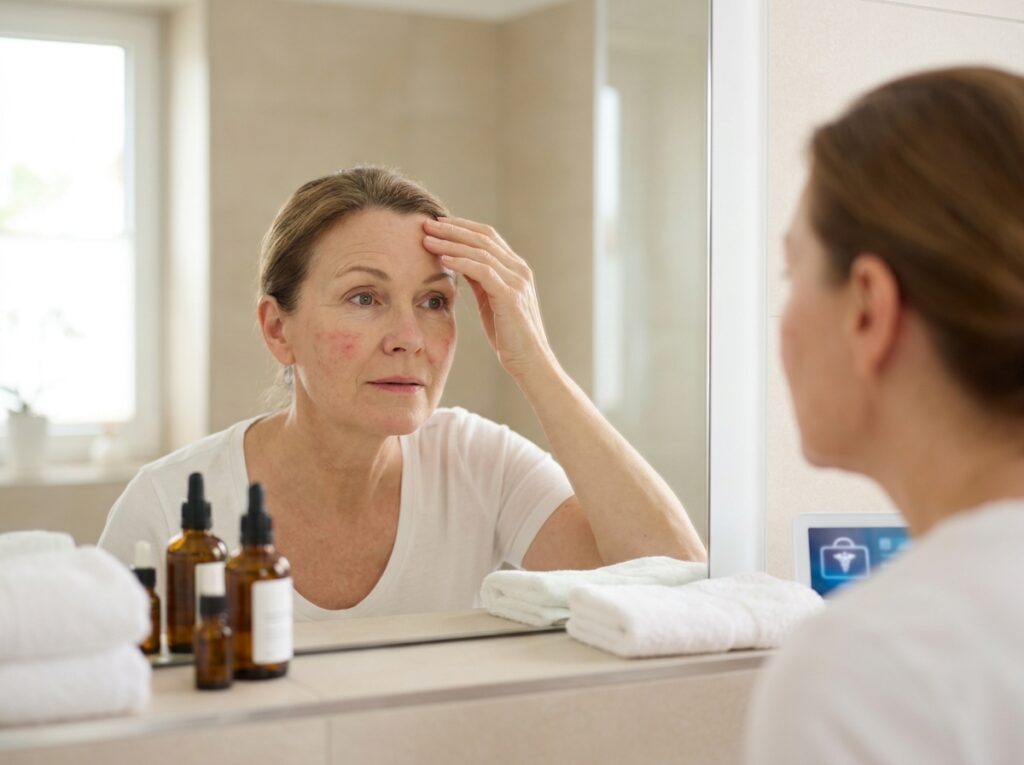
The Skin as a Window Into the Body
Medicine has used the skin as a diagnostic tool for centuries. Hippocrates himself observed skin color to identify internal illnesses. Today, dermatologists and physicians still do the same — with far greater precision.
That’s because the skin shares embryological origins with the nervous system, stays in direct contact with blood circulation, and visibly reacts to hormonal, inflammatory, metabolic, and immune imbalances. When something changes internally, the skin often registers it before any blood test shows abnormalities.
In other words: your skin gets sick last, but warns you first.
Signs That Deserve Attention
Persistent Extreme Paleness
Skin that looks unusually pale — especially in the palms, lips, or inside the eyelids — may indicate anemia. Deficiencies in iron, vitamin B12, or folate reduce hemoglobin production, leaving the skin looking drained and lifeless. If paleness comes with fatigue, shortness of breath, and hair loss, the signal becomes even clearer.
Yellowish Skin and Eyes
Jaundice — a yellow tint in the skin and whites of the eyes — is a classic sign that the liver may not be processing bilirubin properly. It may indicate hepatitis, gallbladder obstruction, cirrhosis, or other liver conditions requiring immediate evaluation. This is not a cosmetic issue to ignore.
Persistent Adult Acne
Teenage acne has a predictable hormonal explanation. But severe acne after age 25, especially along the jawline, chin, and neck, is often linked to hormonal imbalance — polycystic ovary syndrome (PCOS), insulin resistance, or thyroid dysfunction. Treating only the surface without investigating the root cause is like silencing a fire alarm while the house burns down.
Dark Velvety Patches in Body Folds
Darkened, velvety skin in the armpits, neck, groin, or behind the knees has a name: acanthosis nigricans. It’s a visible sign of insulin resistance — a condition that often precedes type 2 diabetes and can sometimes be reversed with lifestyle changes when caught early. Many people spend years trying whitening creams without ever addressing the real cause.
Extremely Dry, Flaky Skin for No Reason
Excessive dryness that doesn’t improve with moisturizers may be a symptom of hypothyroidism. The thyroid regulates cellular metabolism, including oil production and skin cell renewal. When it slows down, the skin loses its ability to stay properly hydrated — and no cream will solve the issue until the hormonal imbalance is treated.
Persistent Facial Redness
Constant redness on the cheeks and nose, especially in adults, may be rosacea — a chronic inflammatory condition connected to gut health, the immune system, and even chronic stress. Recent studies suggest a strong link between rosacea and low-grade systemic inflammation, placing the gut at the center of treatment.
Itching With No Clear Cause
Generalized itching without visible skin lesions may signal problems involving the liver, kidneys, thyroid, or even certain blood disorders. The body releases substances that irritate nerve endings in the skin when specific organs are not functioning properly. If itching persists for weeks without a clear dermatological explanation, deeper investigation is necessary.
Brittle Nails, White Spots, or Deep Ridges
Nails are part of the skin and reveal a lot. White spots may indicate zinc deficiency. Brittle, dull nails may suggest hypothyroidism or deficiencies in biotin and iron. Deep horizontal ridges — called Beau’s lines — can appear after severe illness, surgery, or intense physical stress, marking periods when nail growth temporarily stopped.
The Gut and the Skin: A Constant Conversation
In recent years, science has deepened its understanding of the gut-skin axis — the two-way communication between the gut microbiome and skin health. What happens in the gut often appears on the skin in surprising ways.
Gut dysbiosis — an imbalance in gut bacteria — has been associated with eczema, psoriasis, acne, and rosacea. When beneficial gut bacteria decrease, intestinal permeability increases, toxins enter the bloodstream, and the immune system reacts — often with visible inflammation in the skin.
It’s no coincidence that people with irritable bowel issues often report flare-ups of skin conditions during digestive episodes. The body is an integrated system, and the skin reflects the health of the whole body.
When to See a Doctor
Not every skin change requires immediate alarm, but some signs deserve prompt evaluation:
- Spots that rapidly change in color, shape, or size
- Wounds that do not heal within 3 weeks
- Yellowing of the skin or eyes
- Persistent unexplained itching
- Acanthosis nigricans in body folds
- Severe dryness that does not respond to hydration
In these cases, the best first step is a physician or dermatologist who evaluates the body as a whole — not just the skin itself.
Caring for the Skin From the Inside Out
The good news is that many skin signals respond well to lifestyle changes. Some habits that directly impact skin health include:
- Proper hydration — dry skin often begins internally. Drinking enough water is one of the simplest and most overlooked habits.
- Anti-inflammatory nutrition — reducing ultra-processed foods, refined sugar, and trans fats lowers systemic inflammation that appears in the skin.
- Gut care — probiotics, fiber, and fermented foods help balance the microbiome and directly affect inflammatory skin conditions.
- Stress management — elevated cortisol increases oil production, worsens acne, accelerates aging, and aggravates conditions like psoriasis and eczema.
- Regular blood work — checking thyroid function, iron, vitamin D, and blood sugar at least once a year can identify imbalances before they become visible problems.
Conclusion
Your skin does not lie. It may take time to reveal what’s happening internally, but when it speaks, it speaks clearly — for those willing to listen.
Treating every skin symptom as a purely cosmetic issue means missing a valuable opportunity for prevention. The next time you notice a skin change that doesn’t make sense, before rushing to the pharmacy, ask yourself: what is my body trying to tell me?
Sometimes, the most important answer is right on the surface.
Know someone struggling with skin problems that never seem to improve? Share this article — it could be the beginning of an investigation that changes everything.